
Space Divided by Line Motive — History & Facts
What first catches the eye in Space Divided by Line Motive is the restless energy of its jagged forms—like the memory of a landscape torn into fragments, each color staking its claim. The painting pulls the viewer in with its bold, interlocking shapes: crimson, ochre, deep green, and blue, each edged with a sawtooth precision that suggests both division and connection. The title hints at a guiding principle: the line as both boundary and bridge, a motif that slices through the composition and sets the rhythm.
Here, color is not just surface but a force, pushing and pulling, creating a sense of movement that feels almost musical. The scattered dots across the fields of color add a quiet counterpoint, like notes in a visual score. Created in 1943, this work stands at the threshold of American abstraction, a period when artists like Arthur Dove sought to distill the essence of nature and sensation into pure form. While history has kept few traces of this specific painting's journey, its inclusion in the 19h00s collection marks it as part of a broader search for new visual languages during the mid-20th century.
Such works were rarely made for grand patrons; instead, they emerged from a spirit of experimentation, often shown in progressive galleries or championed by a small circle of collectors. In this context, Space Divided by Line Motive invites us to look again—not for a story told in figures, but for the drama of color and shape, and the possibilities that open up when the line becomes the main character.
More Artworks by Arthur Dove
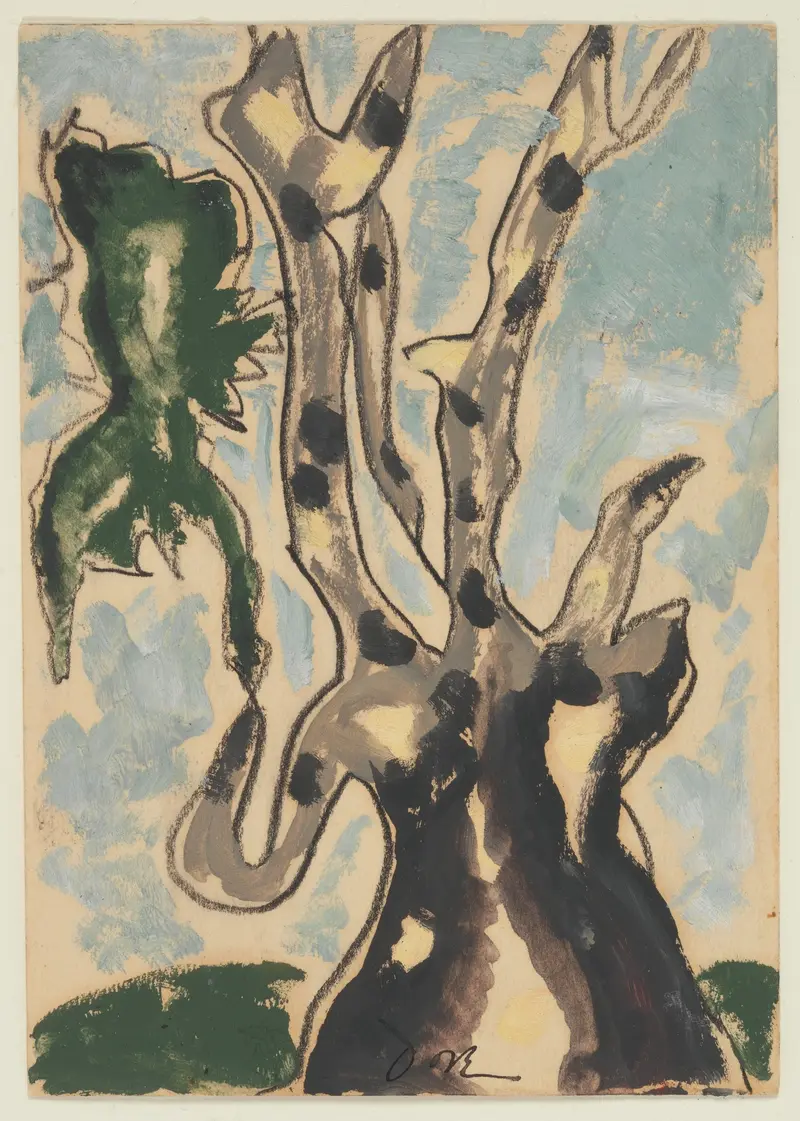
Sycamore
Arthur Dove

Out the Window
Arthur Dove
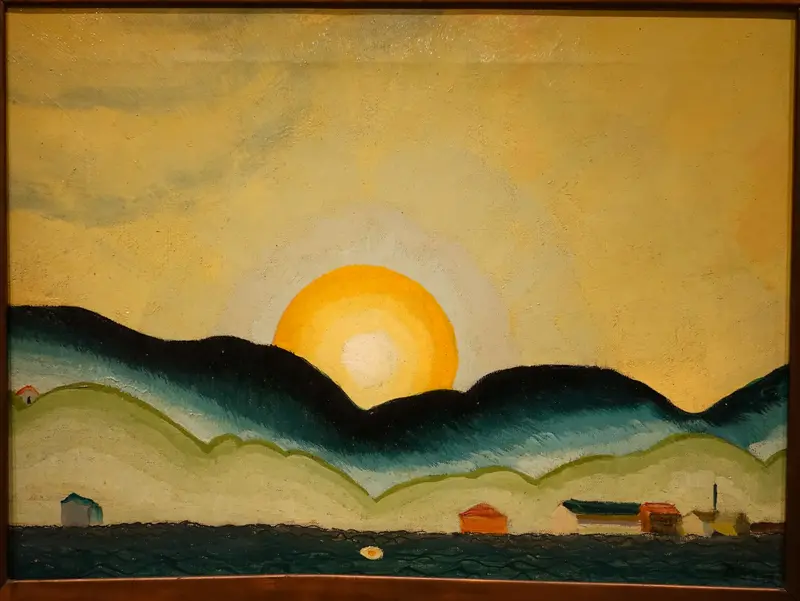
Northport Harbor
Arthur Dove

George Gershwin–‘Rhapsody in Blue,’ Part I
Arthur Dove
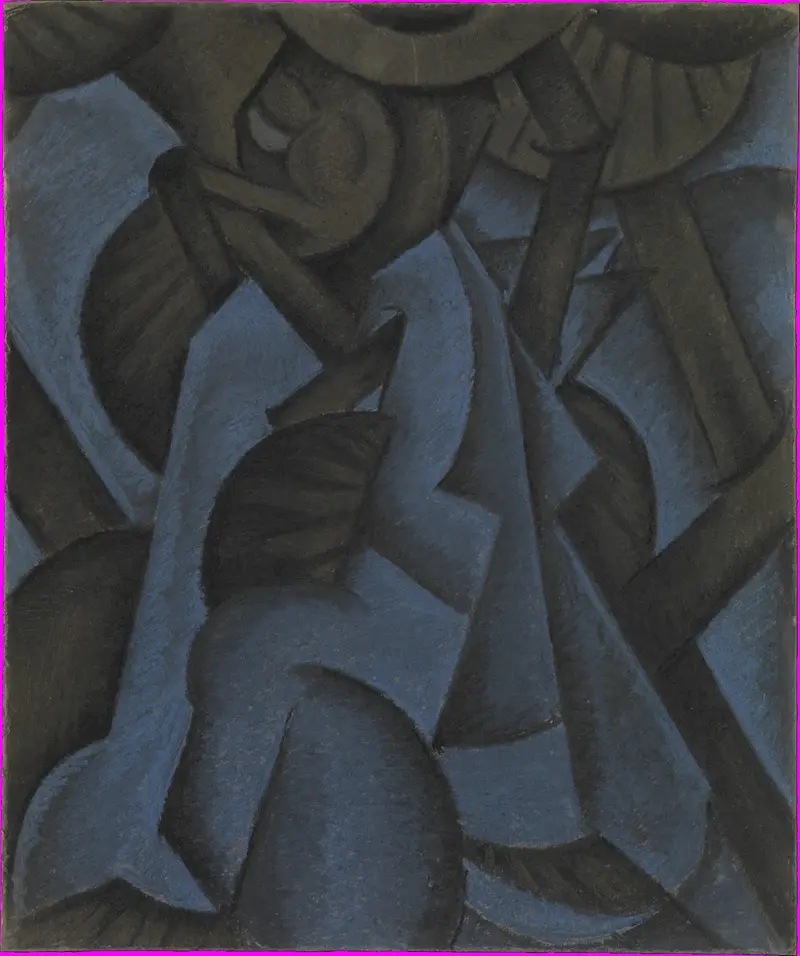
Pagan Philosophy
Arthur Dove
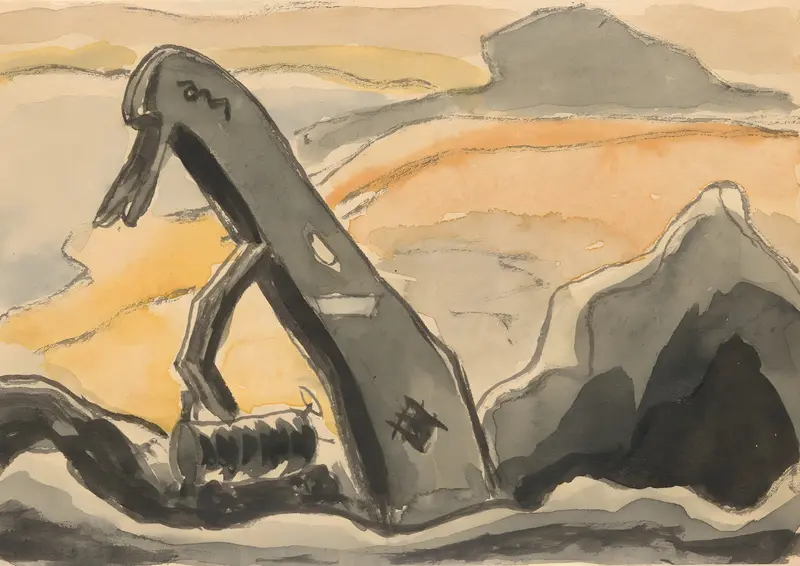
Steam Shovel–Port Washington
Arthur Dove
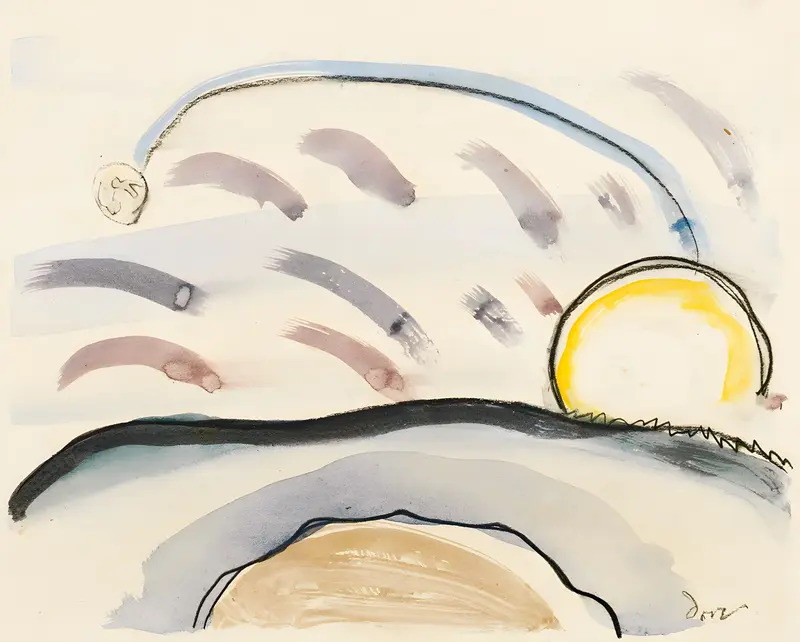
Study for ‘Sun and Moon’
Arthur Dove
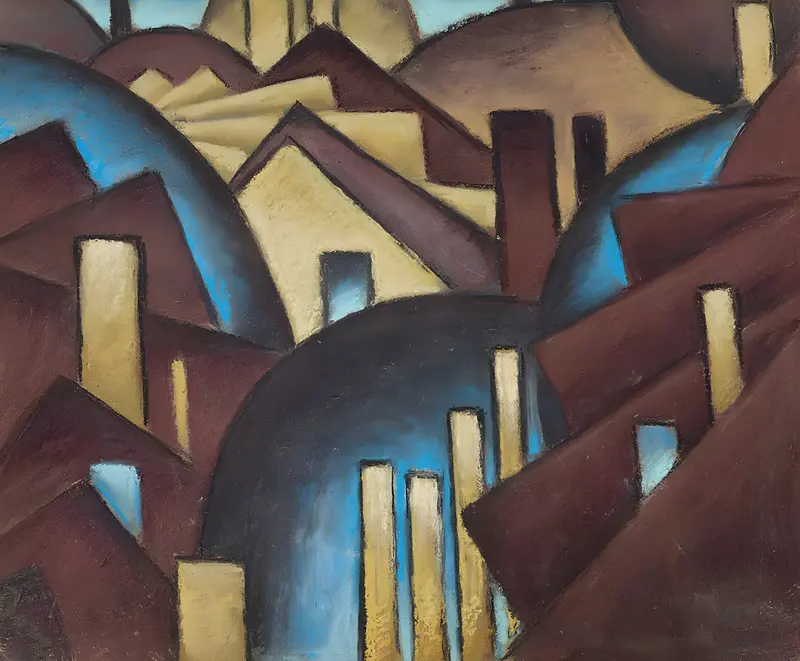
Nature Symbolized No. 1 (Roofs)
Arthur Dove
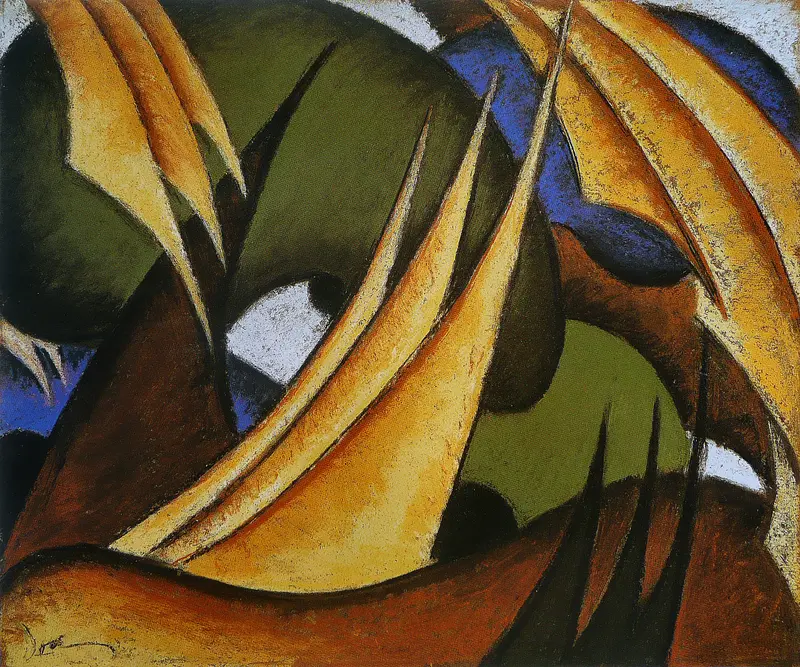
Sails
Arthur Dove

Oil Tanker II
Arthur Dove





