Spanish Villa II — History & Facts
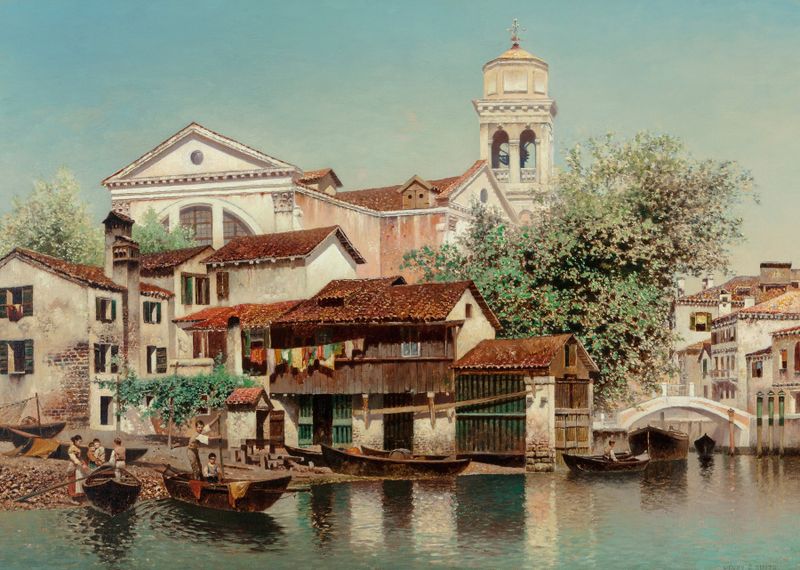
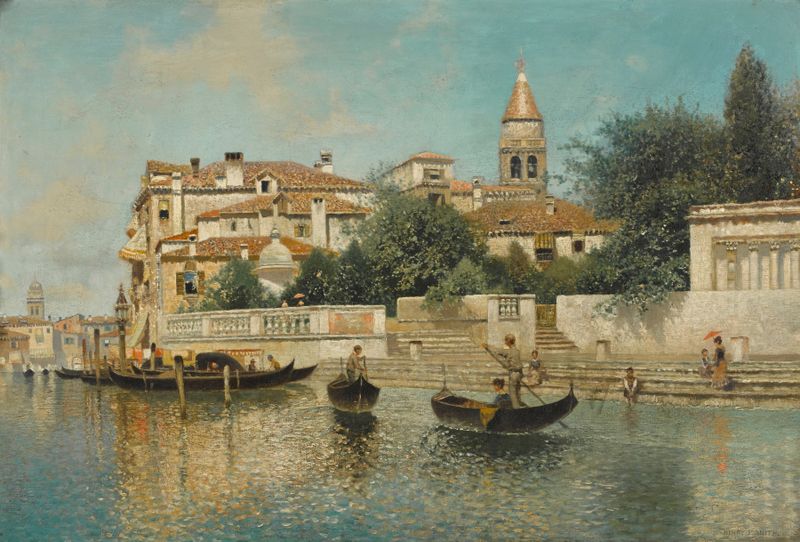
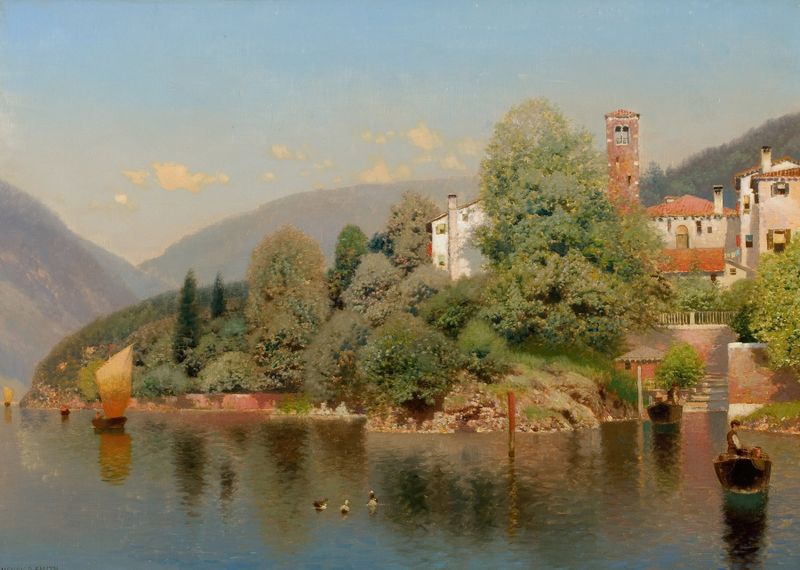
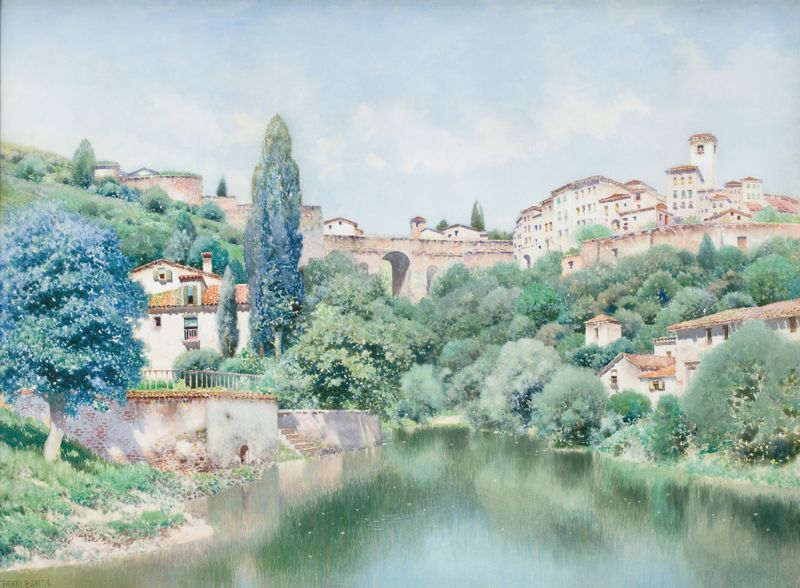
Is this a mirror — or a memory? In Spanish Villa II, the boundaries of reality and imagination blur, inviting viewers to step into a dreamlike reverie where time feels suspended. Look to the left at the archway, framed by blossoming bougainvillea, its vivid magentas dancing in the breeze. The soft light filters through, casting gentle shadows that elongate across the sunlit courtyard. Notice how the artist employs a rich palette of warm earth tones and cool blues to create a harmonious balance, drawing your eye toward the tranquil fountain at the center, its surface reflecting the surrounding beauty like a delicate whisper. The interplay of light and shadow evokes a sense of nostalgia, suggesting the fleeting nature of such idyllic moments.
There is a palpable tension between the vibrancy of the villa and the serene stillness of its surroundings, as if time holds its breath. In the subtle details—the intricate tile patterns and the gently rippling water—lies an invitation to explore the juxtaposition of permanence and transience, urging viewers to consider what memories linger in the corners of their own minds. During the period when this work was created, the artist found himself deeply entrenched in the picturesque depictions of Mediterranean life, reflecting a broader artistic trend that embraced Romanticism's ideals. Though the exact date remains unclear, it was likely painted in the late 19th century when Pember Smith was exploring themes of landscape and nostalgia, capturing the essence of a dream woven into reality amidst a burgeoning fascination with travel and the allure of distant lands.