Spring in France — History & Facts
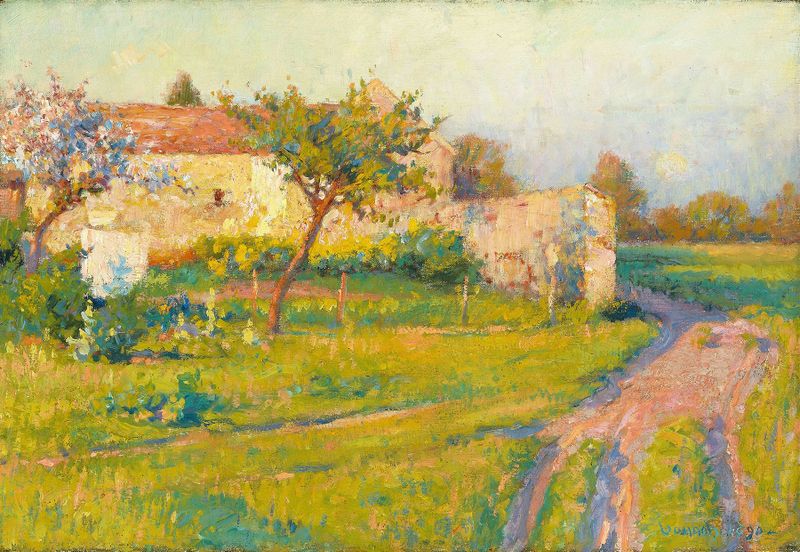
What secret hides in the quiet of the canvas? Beneath the vibrant colors and gentle brushstrokes, a world of hidden whispers waits to be uncovered. Look to the lower left of the scene, where soft green blades of grass cradle scattered wildflowers, their delicate petals dancing in the spring breeze. Notice how the light filters through the leaves overhead, casting playful shadows that intertwine with the vivid hues of pinks and yellows, creating a tapestry of life. The composition breathes warmth and renewal, inviting the viewer to wander through the idyllic landscape that captures the essence of a gentle spring day. Yet, within this tranquility lies a tension.
The juxtaposition of vibrant blossoms against the deep, enveloping shadows speaks of the ephemeral nature of beauty and life. The darker areas suggest moments of introspection, hinting at the fragility that often accompanies such vibrant displays. This interplay between light and shadow encourages contemplation, inviting us to reflect on the cycles of joy and sorrow that define our existence. In 1890, Robert William Vonnoh painted Spring in France during a period of artistic exploration, influenced by the Impressionist movement sweeping through Europe.
Living in Paris, he was immersed in a world that celebrated the fleeting moments of nature's beauty, while also contending with the changing dynamics of the art world. This work serves as a testament to his understanding of both the external world and the internal emotional landscapes it evokes.