Spring Waters (Maestoso) — History & Facts
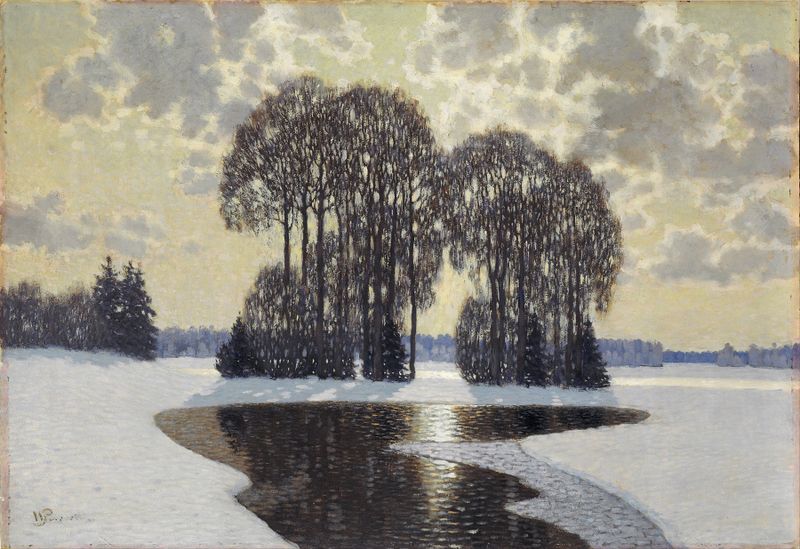
Is this a mirror — or a memory? The gentle embrace of water reflects a world both serene and nostalgic, pulling viewers into a realm where innocence thrives. Focus on the shimmering surface of the water, where soft blues and vivid greens interweave, inviting your gaze to dance across the painting. The brushstrokes are deft, capturing the fluidity of the scene, while the light glimmers like whispers of a forgotten spring. Notice how the delicate interplay of color creates a sense of movement, as if the water itself breathes in harmony with the landscape. Within this tranquil composition lies an emotional tension.
The contrast between the vibrant life above and the stillness below evokes a sense of longing, as if the viewer is caught between the present and a wistful past. Tiny bursts of flora peek through the water’s edge, symbolizing the fragility of innocence as they strive to reach the light. Each element, from the rippling reflections to the soft greenery, speaks to the transient beauty of nature and the fleeting moments of our youth. In 1910, during a period of artistic exploration in Latvia, Vilhelms Purvītis painted Spring Waters (Maestoso) while grappling with the transition from a traditional to a modern artistic vision.
This work emerged as he sought to express the intricate relationship between nature and human emotion, both central themes in his oeuvre and reflective of broader changes in the art world at the time.