Winter — History & Facts
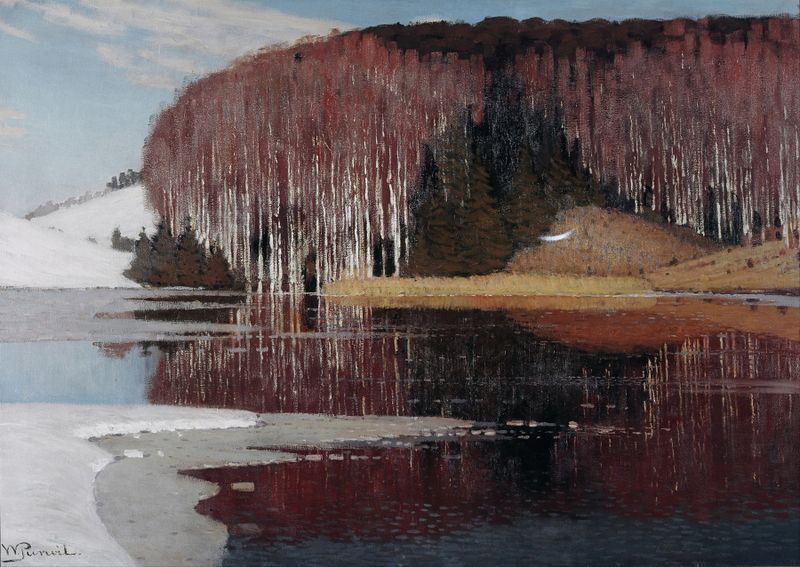
Could a single brushstroke hold eternity? In Winter, the fleeting essence of time is captured through a delicate interplay of frost and warmth, evoking memories of seasons past and futures yet to come. Look to the left at the soft, rolling hills blanketed in white, where layers of paint converge to create a textured surface that mimics the snow's crystalline allure. The muted palette, a symphony of blues and greys, contrasts sharply with the gentle warmth introduced by golden hues in the sky. This subtle gradation hints at the sun's shy emergence, a moment pregnant with the promise of renewal, inviting the viewer to linger in the quiet beauty of transition. Deeper within the scene lies a poignant tension between solitude and tranquility.
The lone figure, draped in muted colors, stands as a silent witness to the landscape, evoking a profound sense of introspection amidst the vastness of nature. The painter’s brushwork suggests movement within stillness, an invitation to reflect on time's relentless passage as the seasons change, reminding us of the cyclical nature of existence. Created in 1910, Winter emerged during a transformative period for Vilhelms Purvītis, who was deeply influenced by the Impressionist movement. Living in Latvia, he sought to capture the beauty of his homeland while developing a unique style that blended realism with a sensitivity to light and atmosphere.
This decade marked a pivotal moment in his career, where he began to establish himself as a leading figure in Latvian art, celebrating the nuances of nature through his evocative landscapes.