Springtime thaw — History & Facts
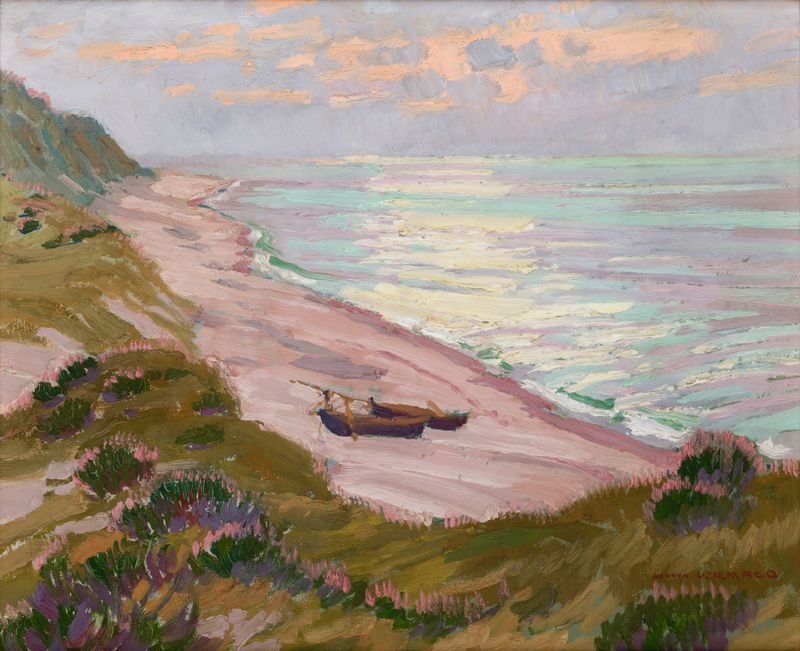
In a fleeting moment, it captures the bittersweet essence of a season's transition, evoking a profound sense of nostalgia and longing. Look to the foreground, where the gentle hues of melting snow invite you into the scene. The cool blues and whites converge with the tender warmth of budding greens, hinting at life's resurgence. Notice how the artist masterfully employs soft brushstrokes, creating an intricate texture that mimics the delicacy of thawing ice.
The play of light reflects the sun’s tentative embrace, illuminating the landscape and enhancing the emotional weight of the painting. As you take in the broader composition, contemplate the juxtaposition of the past and the future represented in this thaw. The remnants of winter linger in the background, symbolizing loss and the melancholy of what has been, while the emerging life suggests hope and renewal. This duality creates a poignant tension, inviting viewers to reflect on their own experiences of change and the inevitable passage of time. In 1908, Uziembło painted this work during a period of personal struggle and artistic exploration in Poland.
The world of art was experiencing shifts towards modernism, and the artist found himself caught between traditional techniques and burgeoning new ideas. The themes of nature and emotion in Springtime Thaw resonate with this transitional period, capturing a moment of introspection as the artist confronted his own artistic identity amidst the evolving landscape of contemporary art.