Willows at a pond — History & Facts
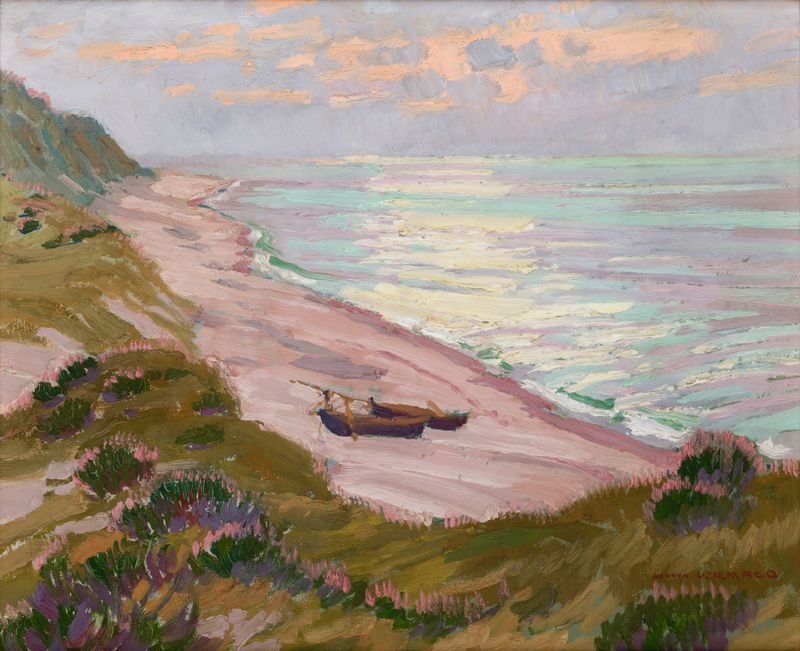
Did the painter know this moment would outlive them? In a world that churns with chaos, fleeting beauty often dances on the edges of madness, waiting to be captured. Focus on the tranquil water nestled within the vibrant greens of the willows. Look closely at the interplay of light and shadow as it reflects on the pond's surface, creating a shimmering tapestry. Notice how the brushwork conveys movement, each stroke whispering secrets of the gentle breeze and rustling leaves, inviting you deeper into this serene moment.
Uziembło’s choice of soft, muted colors evokes a sense of nostalgia, as if the scene has been plucked from a dream. Yet beneath the calm lies an undercurrent of tension. The willows, with their drooping branches, could symbolize both comfort and confinement, a reminder of nature's beauty intertwined with the madness of life’s unpredictability. The water, mirroring the trees, hints at duality—the serene surface may mask deeper currents, mirroring our own hidden struggles.
This tranquil pond becomes a refuge, yet it also reflects the inherent chaos of existence, suggesting that even in stillness, there is turmoil. In 1900, Henryk Uziembło painted Willows at a Pond amid the ebb and flow of the Polish art scene, where the influence of Romanticism still lingered. This period marked a time of personal exploration for the artist, as he navigated the complexities of identity and nature. As he sought to express the emotional landscape surrounding him, his work resonated with an audience yearning for connection, grounding the beauty of the world even as it teetered on the brink of madness.