Stad in de Eifel — History & Facts
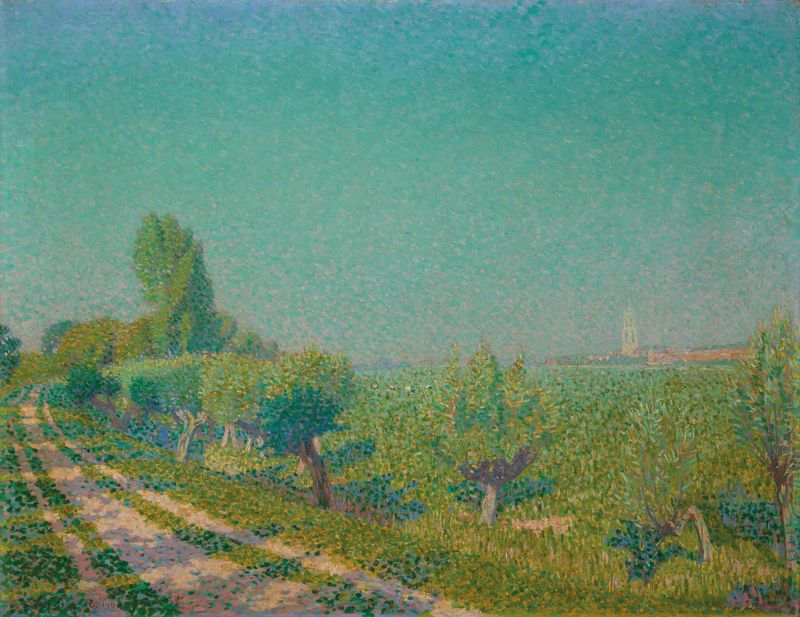
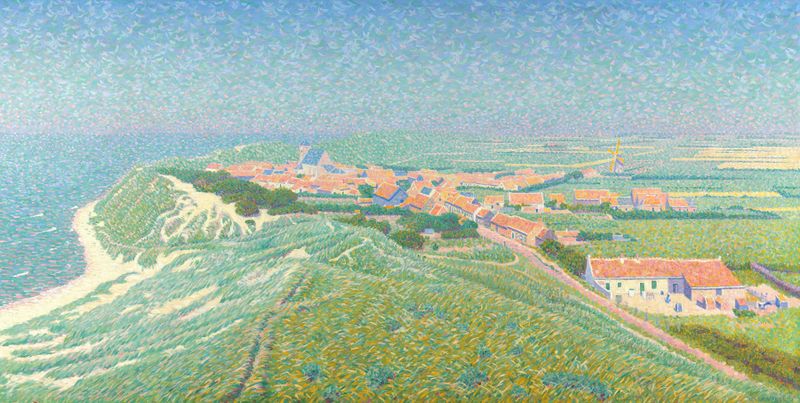
When did color learn to lie? In Stad in de Eifel, the vibrant hues of the landscape blur the boundary between reality and imagination, beckoning us into a world that feels both familiar and surreal. Look to the left, where a quaint village nestles against rolling hills, bathed in a golden light that dances across the rooftops. The artist's brushwork, both loose and deliberate, creates a tapestry of greens and yellows that seem to breathe with life. Notice how the sky shifts from a gentle cerulean to streaks of orange and pink, echoing the dynamic tension between day and night.
Each stroke not only defines the architecture but also imparts a sense of warmth and intimacy that envelops the viewer. Beneath the tranquil surface lies a deeper resonance of change. The juxtaposition of the sturdy, traditional buildings against the untamed natural landscape hints at the tensions of an era in flux—a society grappling with the impending changes of industrialization. The choice of color, both comforting and electric, suggests a revolution of perception, as the picturesque beauty of the Eifel conceals the complexities of progress and tradition.
Each element carefully crafted reveals a story of coexistence and conflict. Ferdinand Hart Nibbrig painted Stad in de Eifel in 1876 during a period of artistic exploration in the Netherlands, marked by a renewed interest in landscape painting. Living in The Hague, he was influenced by the Dutch masters while also responding to the broader European art movements that embraced Impressionism. This period saw a shift toward capturing the fleeting moments of nature and life, reflecting both personal and societal transformations.