Vue de Rhenen — History & Facts
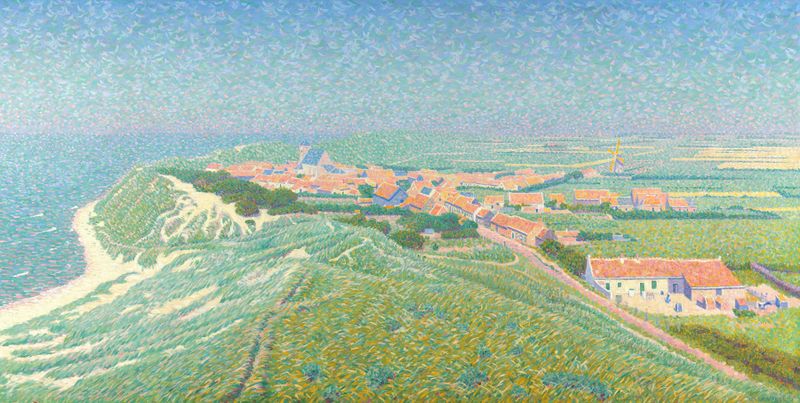
Where does light end, and longing begin? In Vue de Rhenen, the canvas breathes with a sense of transformation that beckons the viewer into its tranquil embrace. Focus first on the luminous sky, a cornucopia of soft blues and warming yellows that gently cradle the horizon. The brushstrokes are deft and rhythmic, guiding the eye across the undulating hills that cradle the quaint town below. Notice how the light cascades through the trees, dappling the landscape with an ethereal quality, while the gentle reflections in the water mirror this harmony, suggesting an interconnectedness between earth and sky. Yet, amidst the serene beauty, subtle contrasts emerge.
The static solidity of the town blends seamlessly with the fluidity of nature, and the vibrant colors evoke both serenity and a hint of yearning. This duality invites reflection on the transient nature of life, as the viewer grapples with the tension between permanence and change within the picturesque scene. Each brushstroke seems to whisper secrets of transformation, inviting us to ponder what lies beyond the visible. Ferdinand Hart Nibbrig painted Vue de Rhenen in 1908 during a time of personal exploration and artistic growth.
Working in the Netherlands, he was influenced by the artistic movements of the late 19th and early 20th centuries, which emphasized the interplay of light and color. This period marked a significant transformation in Nibbrig's work, as he sought to capture the ephemeral beauty of his surroundings while reflecting on his own place within the evolving art world.