
Stadsgezicht — History & Facts
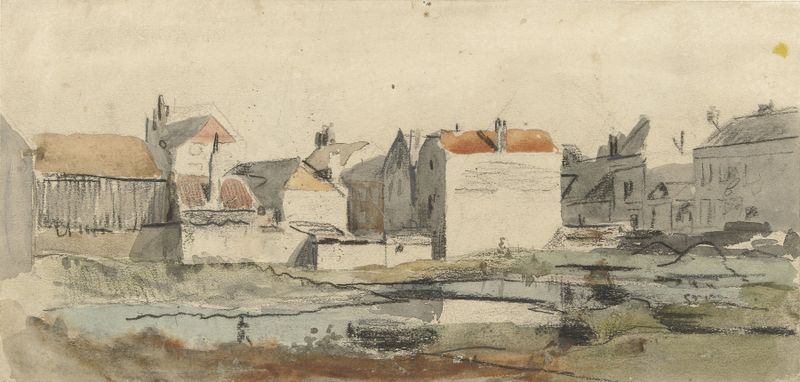
In a world that is constantly moving, how do we capture the stillness of life’s fleeting moments? Look closely at the vibrant tableau before you, where a bustling city unfolds under a soft, golden hue. Focus on the architecture; the delicate brushwork breathes life into the buildings, each line intricate and deliberate. Notice how the light dances upon the rooftops, casting shadows that hint at stories untold.
The palette of warm earth tones invites you into this urban sanctuary, creating a sense of nostalgia for a place both familiar and distant. As you delve deeper, consider the juxtaposition of activity and tranquility. The softly flowing water reflects the passing clouds, a metaphor for the transience of existence. Observe the figures moving purposefully through the streets, their faces obscured, representing the anonymity of urban life.
Each element in the painting captures the tension between the vibrancy of life and the inevitability of mortality—every brushstroke immortalizing a moment that will never return. During the period from 1822 to 1895, the artist created Stadsgezicht in the Netherlands, a time marked by the transition into modernity. Behr was influenced by the burgeoning urbanization and the romantic yearning for authenticity in art. He sought to emphasize the beauty of everyday life while grappling with the ephemeral nature of existence, a reflection of both his personal experiences and the broader cultural shifts surrounding him.
More Artworks by Carel Jacobus Behr
Browse all →

More Architecture Art
Browse all →
The statue of Liberty
Frédéric Auguste Bartholdi

View of Houses in Delft, Known as ‘The Little Street’
Johannes Vermeer

View of Houses in Delft, Known as ‘The Little Street’
Johannes Vermeer

The Cathedral in Rouen. The portal, Grey Weather
Claude Monet

The yellow house
Vincent van Gogh

The Church in Auvers-sur-Oise, View from the Chevet
Vincent van Gogh