Straatgezicht met doorkijk op de Grote Kerk te Breda — History & Facts
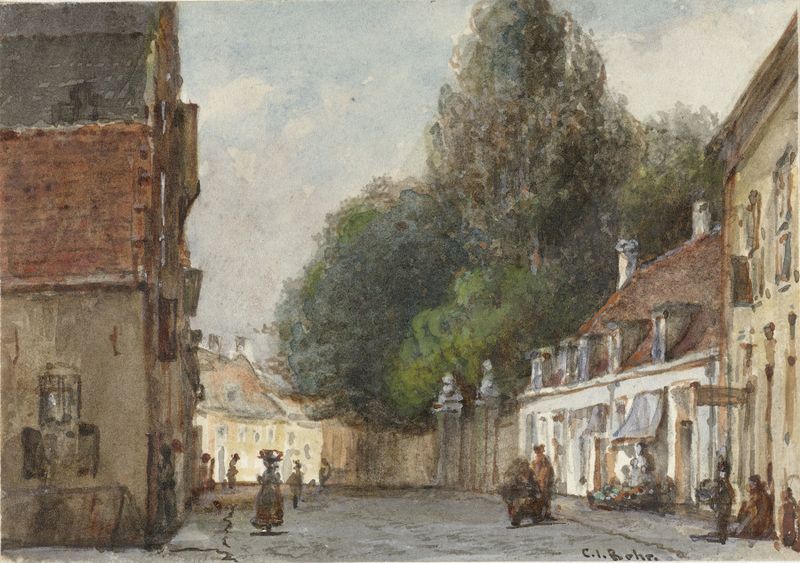
This sentiment rings true in the tranquil ambiance of Straatgezicht met doorkijk op de Grote Kerk te Breda, where beauty emerges from a landscape steeped in history and silence. Look to the left of the canvas, where the cobblestone street meanders gently towards the towering spire of the Grote Kerk. The artist crafts a harmonious interplay of warm ochres and soft blues, guiding the viewer’s gaze through the scene. Notice how the light dances across the buildings, illuminating their façades with a gentle glow that invites you to linger.
Each brushstroke seems to breathe life into the quaint architecture, framing the church like a beacon of faith amidst the ordinary bustle of daily life. Yet, beneath the surface, the painting holds layers of complexity. The juxtaposition of the church's steadfast presence against the fleeting nature of urban life evokes a poignant reflection on time and permanence. The figures, small and somewhat obscured, appear absorbed in their own worlds, indifferent to the grandiosity of the space surrounding them.
This contrast between the monumental and the mundane reveals a delicate tension—one that speaks to the often-overlooked beauty in our everyday surroundings. In 1832, while residing in the Netherlands, Behr captured this scene during a time when Romanticism was influencing Dutch art. The nation was experiencing a cultural revival, with artists seeking to express the unique beauty of their homeland. This was a period marked by a growing appreciation for the picturesque, and through his work, Behr contributed to this movement, celebrating the charm of Breda and its iconic church in a manner that resonates with viewers even today.