Stampa, Bergell — History & Facts
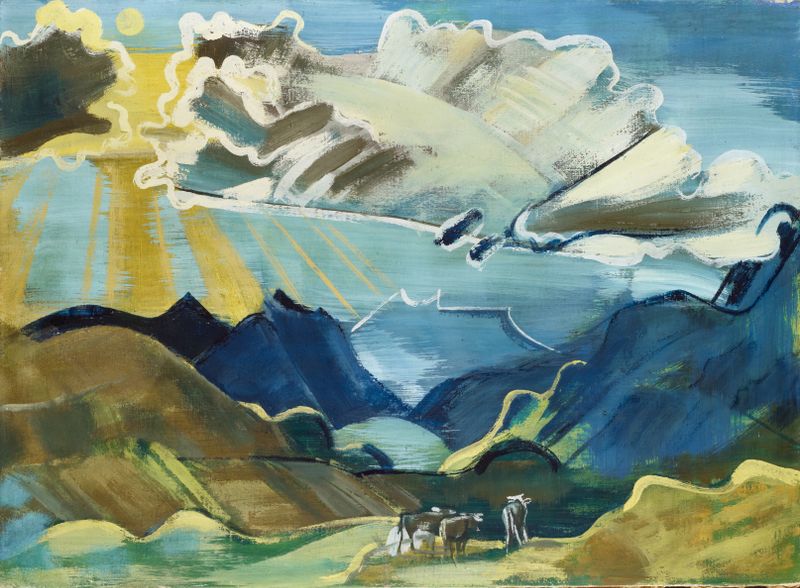
Can paint confess what words never could? In Stampa, Bergell, the canvas seems to whisper secrets of the mountains, evoking a sense of emptiness that resonates deeply within the viewer's soul. Look to the left at the towering peaks, their jagged edges slicing through the serene sky, painted in sumptuous blues and gentle whites. The hillside meanders down towards the quaint village, where the earthy browns and vibrant greens of the landscape harmonize, creating a delicate contrast between nature's rugged beauty and human habitation. Notice how the brushstrokes convey movement; the trees sway gently as if responding to an unseen breeze, while the clouds float lazily above, inviting you to lose yourself in this tranquil moment. Yet amid this picturesque scene lies an emotional void.
The absence of human figures stirs a feeling of isolation, contrasting the vibrant life of the village with the looming mountains that encircle it. Shadows dance quietly across the canvas, hinting at the fragility of existence, while the interplay of light and dark suggests both peace and a poignant longing. Each detail reflects a connection to nature that raises questions about solitude and belonging within the vast, indifferent landscape. Created in 1911, this piece emerged during a transformative time for August Babberger, who found himself deeply influenced by the natural beauty of the Swiss Alps.
At this moment, the artist was exploring his identity within the burgeoning modernist movement, finding solace and inspiration in the untouched landscapes around him. The world was on the brink of war, and this painting captures a fleeting serenity that stands in stark contrast to the tumultuous times ahead.