
Standing Man, with Arms Akimbo — History & Facts
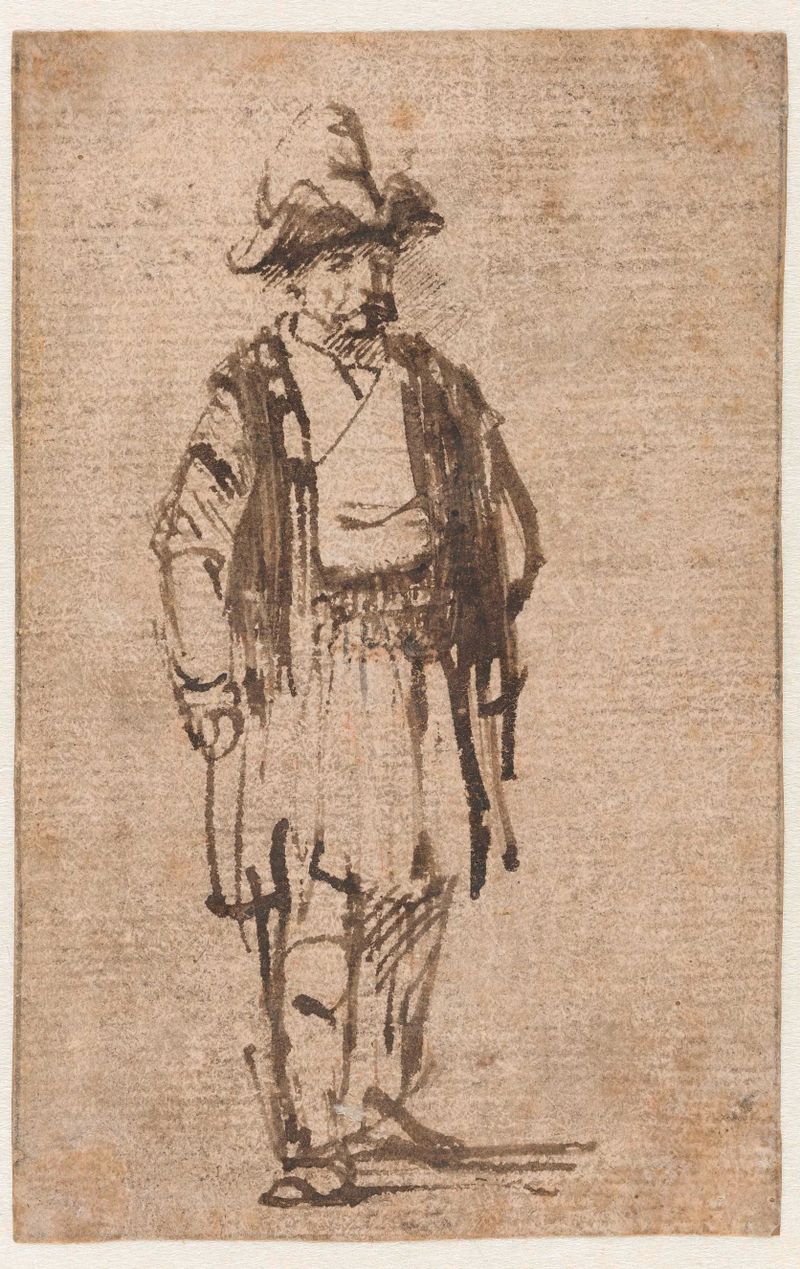
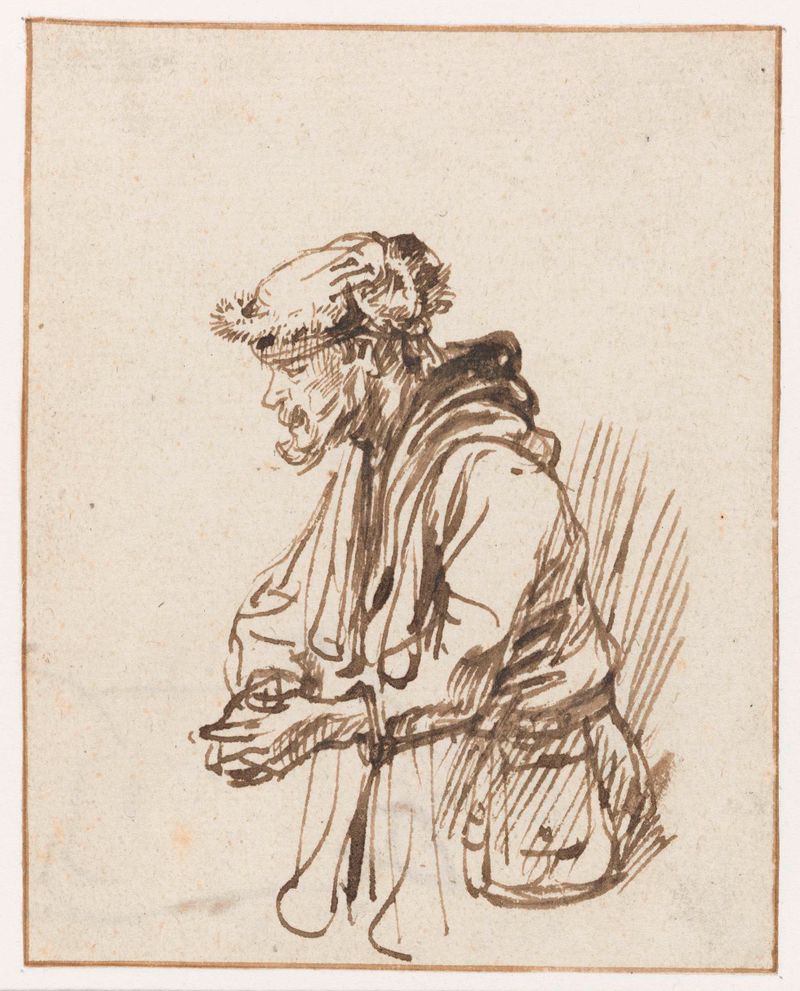
Could beauty survive in a century of chaos? The question lingers as you stand before this striking portrayal of a solitary figure, embodying strength and contemplation amidst the tumult of a changing world. Look to the center of the canvas, where the standing man captures your gaze with his arms akimbo, exuding an air of confidence and defiance. His face, framed by loose, flowing hair, reflects a soft yet intense expression that draws you in. Notice how the warm, earthy tones of his clothing contrast with the cool shadows that loom behind him, enhancing the depth of the composition.
The light falls delicately over his torso, illuminating the contours of his body while subtly suggesting a narrative beneath the surface. Within this stillness lies a tension between vulnerability and power. The man's posture, though relaxed, suggests readiness, as if he stands on the brink of decision or action. The simplicity of his attire hints at a deeper relationship with the time period, evoking themes of social status and individuality.
This duality can be seen in the shifting shadows; they envelop him, yet he remains unaffected, a silent commentary on the struggle for identity during a time of uncertainty. Willem Drost created this work around the mid-17th century, during a period of both artistic innovation and social upheaval in the Netherlands. Emerging from the influence of Rembrandt, Drost's paintings reflect a growing interest in realism and the human condition, mirroring the complexities of a society grappling with its own transition. It was a time rich with exploration and change, and Standing Man, with Arms Akimbo exemplifies how art can crystallize the enduring beauty found within such chaos.
More Artworks by Willem Drost
Browse all →

More Portrait Art
Browse all →
Las meninas
Diego Velázquez

Self-portrait with a Bandaged Ear and Pipe
Unidentified artist

Girl with a Pearl Earring
Johannes Vermeer

The Sampling Officials of the Amsterdam Drapers’ Guild, Known as ‘The Syndics’
Rembrandt van Rijn

The Hundred Guilder Print: the man seen on the back in the lower left corner
Rembrandt van Rijn

Portrait of Dr Gachet
Vincent van Gogh