Still Life with Flowers — History & Facts
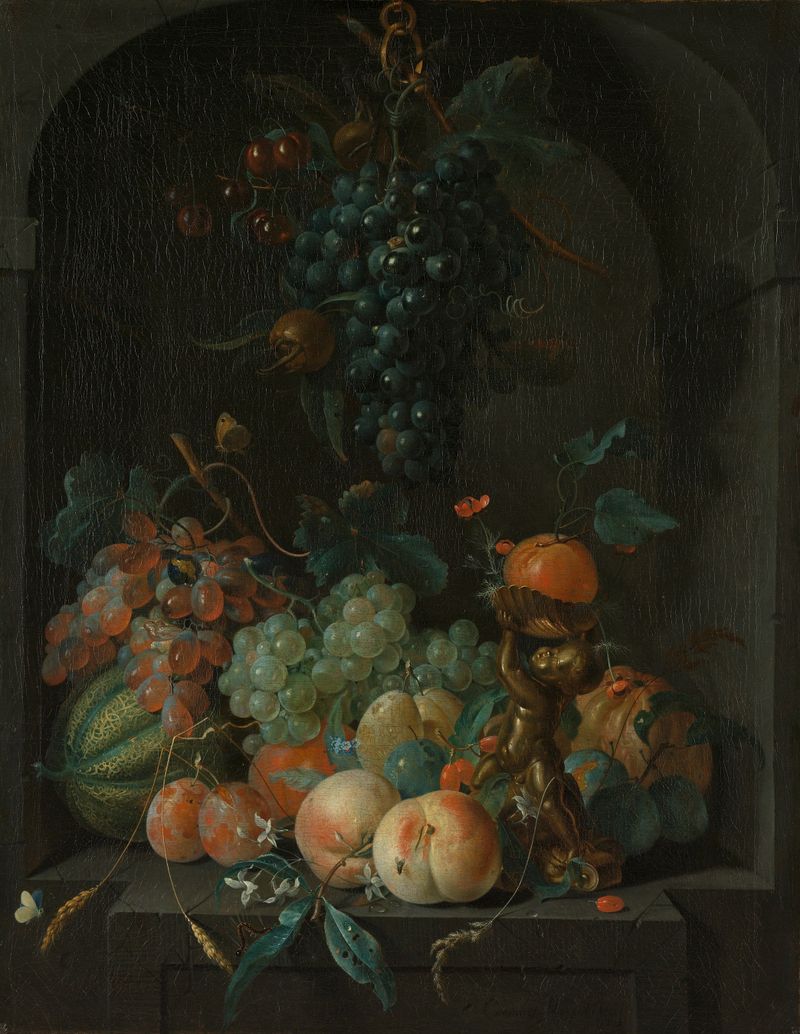
What if silence could speak through light? In Still Life with Flowers, the delicate blooms seem to whisper the passage of time, capturing both beauty and transience in a single moment. Focus on the vibrant blossoms that dominate the canvas, each petal painted with meticulous detail, inviting you to explore their textures and hues. Notice how the light falls upon the flowers, creating contrasts that breathe life into the composition. The background, a soft, muted tone, enhances the vibrancy in the foreground, emphasizing the flowers as the centerpiece of this exquisite arrangement.
Each element is carefully placed, leading the viewer’s eye through an orchestration of color and shadow. Yet, beneath this floral beauty lies a deeper commentary on impermanence. The very act of arranging these blooms speaks to the fleeting nature of life, where even the most radiant flowers eventually wilt. The subtle decay hinted at in the few drooping petals evokes a quiet melancholy, a reminder of time's relentless march.
The play between vibrancy and fading underscores a poignant tension, encapsulating both celebration and sorrow. In 1721, Coenraet Roepel painted this work during a period marked by a growing interest in still life, particularly in the Netherlands. As artists sought to explore the interplay of light and texture, Roepel emerged as a significant figure in this genre. At this time, he was refining his craft, navigating a world that appreciated not only the beauty of nature but also its poignant impermanence, capturing both in his blooming composition.