Still Life with Fruit — History & Facts
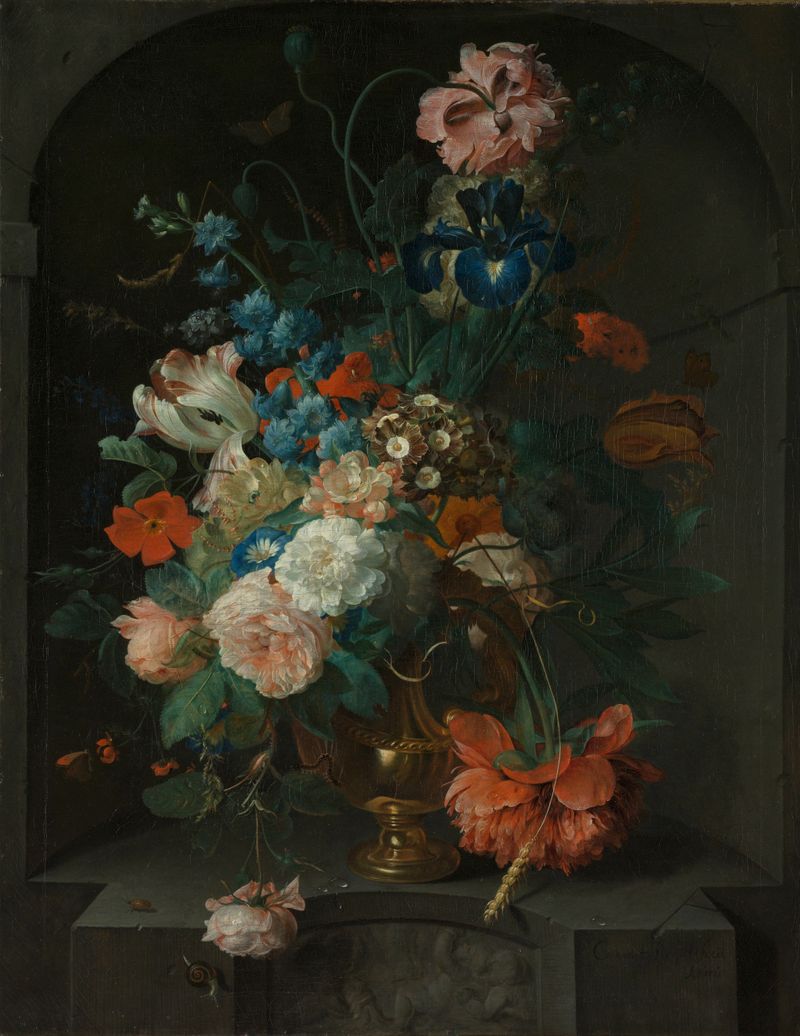
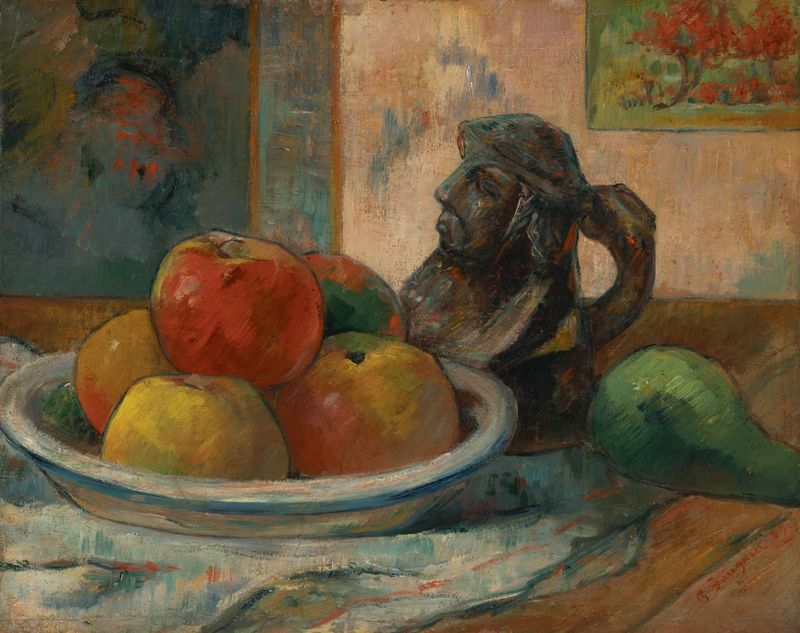
In the tranquil embrace of a still life, hope emerges from the rich hues of nature’s bounty, whispering secrets of life in every brushstroke. Look to the center of the canvas where a cornucopia of ripe fruits spills forth — radiant oranges, deep red apples, and plump, green pears. The artist’s mastery is evident in the delicate rendering of textures; notice how the light plays upon the dappled skin of each fruit, casting subtle highlights and shadows that breathe life into the arrangement. The dark background serves as a stage, allowing the vibrant colors to leap forward, inviting the viewer to relish the beauty and abundance captured within a moment. Yet, amidst this feast for the eyes, there lies a deeper layer of emotional tension.
The fruits, while ripe and inviting, evoke the fleeting nature of life—a reminder of growth, decay, and the transient moments of joy they represent. The interplay of light and shadow suggests a quiet meditation on the passage of time, as well as the quiet hope that lies in the acceptance of life’s impermanence. The arrangement is both celebratory and poignant, urging us to cherish every moment. In 1721, Roepel painted this still life during a period where Dutch art was flourishing, reflecting a culture that deeply valued beauty in the everyday.
Working in his native Holland, he was part of a tradition that celebrated both the tangible and the metaphorical aspects of life. His works often served to elevate simple objects, infusing them with greater meaning amidst the hum of daily existence, marking a significant moment in the evolution of still life as a revered genre.