Still Life with Flowers and a Watch — History & Facts
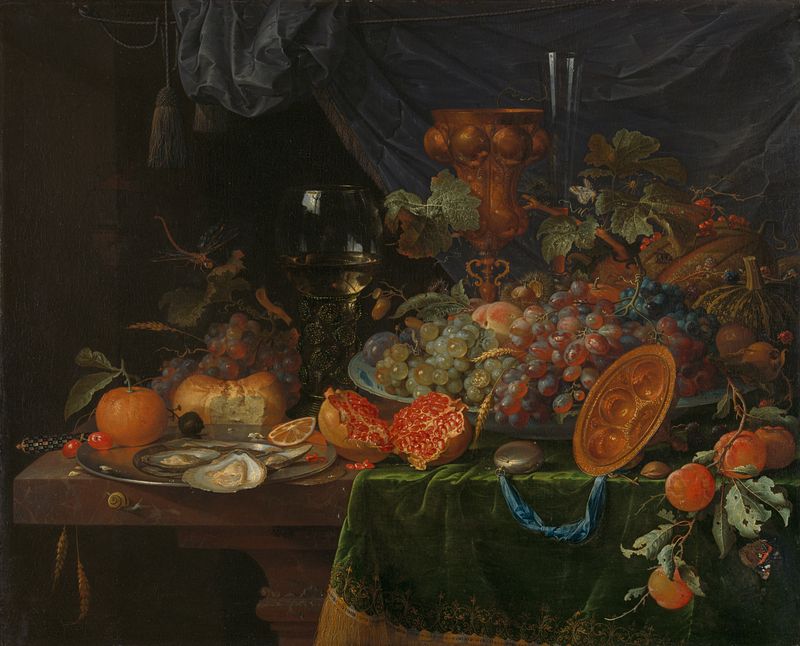
In the stillness of a moment captured in paint, the essence of existence weighs heavily against the backdrop of time’s relentless passage. The juxtaposition of vibrant life and mechanical precision invites contemplation of what it means to truly live amidst the inevitability of change. Look to the left at the resplendent blossoms, their petals glowing with a rich spectrum of color—crimson, gold, and violet. In stark contrast, the cold, metallic watch lies nearby, its glint a stark reminder of the ticking seconds.
The artist employs a masterful interplay of light and shadow, where the soft illumination caresses the flowers, enhancing their vitality, while harsh angles define the watch’s form, lending it an aura of severity amidst the floral effulgence. The composition is tightly arranged, directing the gaze toward the delicate balance between nature and time. Delve deeper, and one finds layers of meaning rooted in the interplay of life and mortality. The flowers, symbols of beauty and transient joy, are at odds with the watch, representing the inexorable truth of time’s march.
This contrast serves as a poignant reminder of life's fleeting moments, evoking a subtle tension between celebration and mourning. Perhaps, in this still life, the artist invites us to reflect on our own revolutions—personal, social, and historical—demanding that we confront the interplay of joy and sorrow in our existence. During the late 1660s, the artist was immersed in the Dutch art scene, characterized by its interest in still life as a genre. Working in Utrecht, he navigated the shifting tides of artistic expression that accompanied the broader cultural upheaval of the time.
Mignon’s delicate yet profound depictions mark his response to both the beauty of nature and the relentless passage of time, a commentary resonating with the revolutionary spirit of his era.