Still Life with Hare and a Black Rooster — History & Facts
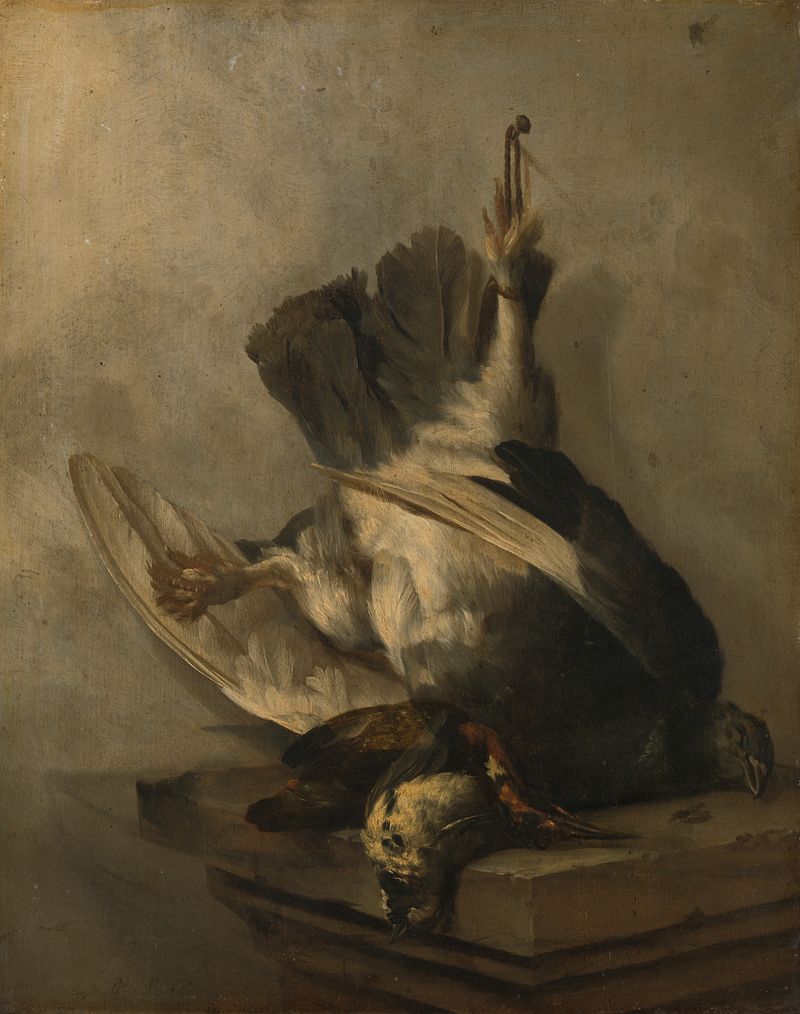
In the interplay of light and shadow, the essence of existence is captured, whispering secrets of life and death that linger in the stillness. Focus on the haunting contrast between the dark plumage of the rooster and the soft fur of the hare, both set against a muted backdrop. Notice how the light delicately washes over the subjects, creating a play of highlights that enhances their textures. The meticulous arrangement draws the eye to the hare’s gentle repose, while the rooster’s proud stance adds a tension—a juxtaposition of vulnerability and strength.
Each element is a carefully chosen note in a symphony of shadows. The shadows cast across the table hint at deeper reflections on mortality and the cycle of life. The hare, with its serene posture, embodies the ephemerality of life, while the rooster, with its vibrant presence, signifies vitality and perhaps even resurrection. Together they create a dialogue, where silence becomes a canvas for contemplation, inviting the viewer to ponder the relationship between nature and humanity—a reminder of both fragility and resilience. In 1659, Cornelis Lelienbergh created this work amidst the flourishing art scene of the Dutch Golden Age.
Working in Amsterdam, he was influenced by the realism of his contemporaries and the burgeoning interest in still life as a genre. During this period, artists explored themes of transience and beauty, embedding layers of meaning within seemingly simple compositions. Here, in this work, Lelienbergh masterfully encapsulates the complexities of existence through the lens of still life.