Still Life with Woodpecker and Snipes — History & Facts
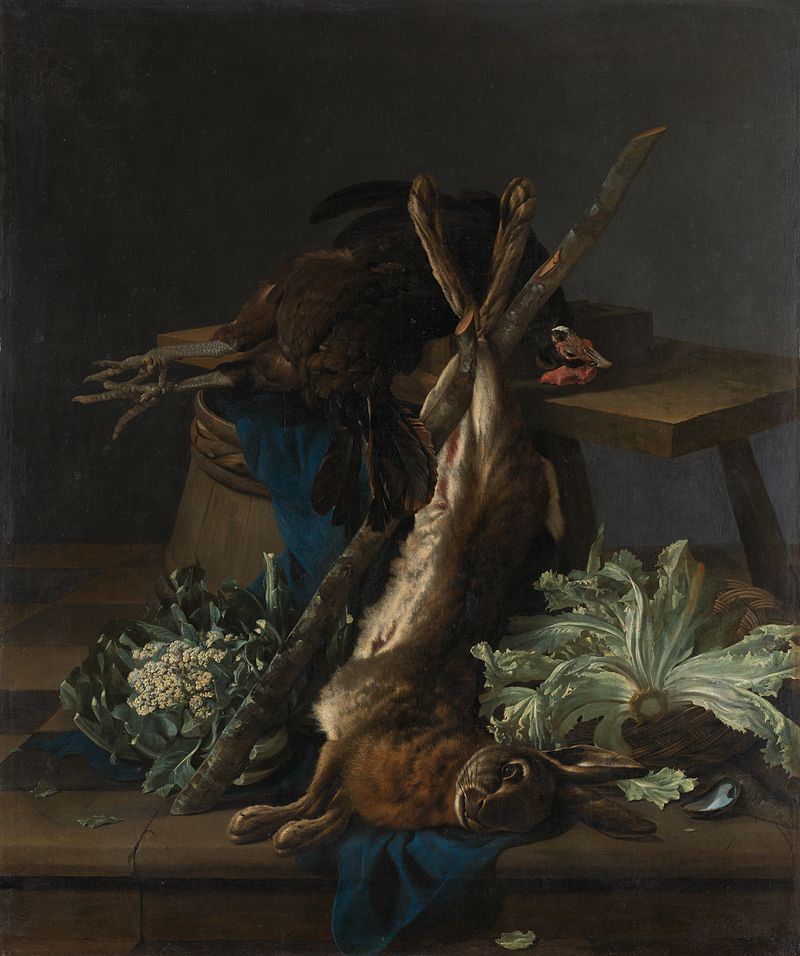
In Still Life with Woodpecker and Snipes, the viewer is drawn into a world where the ordinary melds with the extraordinary, hinting at the madness that can lurk beneath serene surfaces. Look to the left, where the woodpecker, with its intricately detailed feathers, perches precariously. The vibrant reds and greens of its plumage contrast sharply with the muted tones of the snipes, a visual dialogue that creates tension within the composition. Notice how the light cascades across the table, illuminating the textures of the feathers and the gleam of the silverware, casting shadowy whispers that suggest hidden stories.
Each element is meticulously arranged, inviting a closer inspection that reveals the artist's masterful technique and thoughtful orchestration. Beneath the surface, there is a disquieting juxtaposition of beauty and decay. The lifeless birds, once vibrant, now serve as memento mori, echoing themes of mortality and transience. Their stillness contrasts sharply with the vibrant life they once represented, evoking an emotional response that speaks to madness lurking behind the facade of beauty.
The carefully curated objects reflect not just aesthetic choices but also the complexity of existence, where the magnificent can coexist with the grotesque. Cornelis Lelienbergh painted this work in 1655, a period marked by a growing interest in still life among Dutch artists. Following the Thirty Years' War, societal changes had instigated a fascination with everyday subjects, yet Lelienbergh’s approach hints at personal struggle amidst artistic exploration. As he created this piece, he was navigating the intricate balance of beauty and chaos, a reflection of both the world around him and his own inner turmoil.