Storm off the Dutch Coast. Scene from Scheveningen — History & Facts
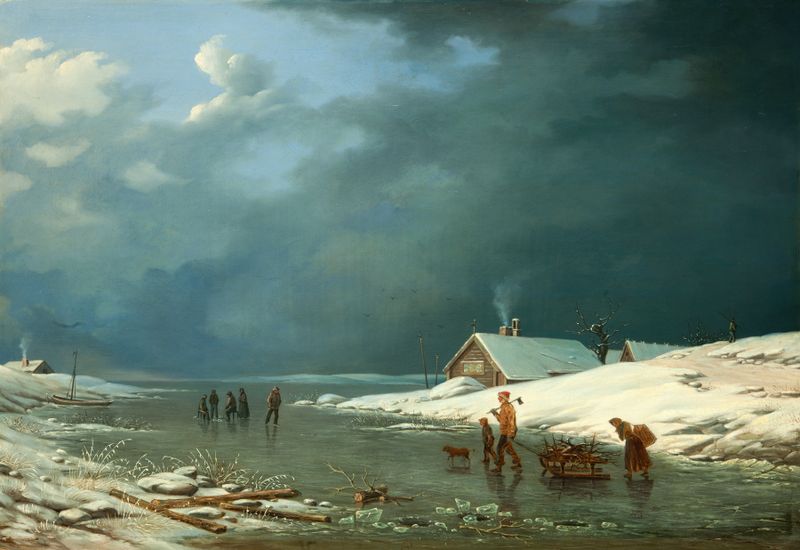
Can beauty exist without sorrow? In Storm off the Dutch Coast. Scene from Scheveningen, tranquility and turmoil coexist, revealing the complex fabric of human experience that art can capture. Focus first on the horizon, where dark, swirling clouds loom ominously over the restless sea. Notice how the brush strokes pulsate with energy, suggesting movement and chaos, a stark contrast to the soft, warm light breaking through the gloom.
The delicate play of blues and grays draws the viewer's eye, while the churning waves hint at both danger and beauty, creating a tension that is palpable. Look closely at the tiny figures braving the elements on the shore; their posture speaks volumes. The fishermen's determination amidst the tumult reflects humanity's struggle against nature's unpredictability. Simultaneously, the illuminated patches of water suggest hope, as if to remind us that serenity often follows storms.
It is this duality—between despair and calm—that encapsulates the emotional core of the piece, inviting deep contemplation. Albert Berg painted this work in 1865, during a period of artistic exploration in the Netherlands that sought to blend realism with emotion. The mid-19th century was marked by a fascination with nature's raw power, as artists aimed to convey both the sublime and the sublime's inherent risks. Berg's rendering reflects his ability to merge technical skill with emotive depth, encapsulating a moment that resonates far beyond its physicality.