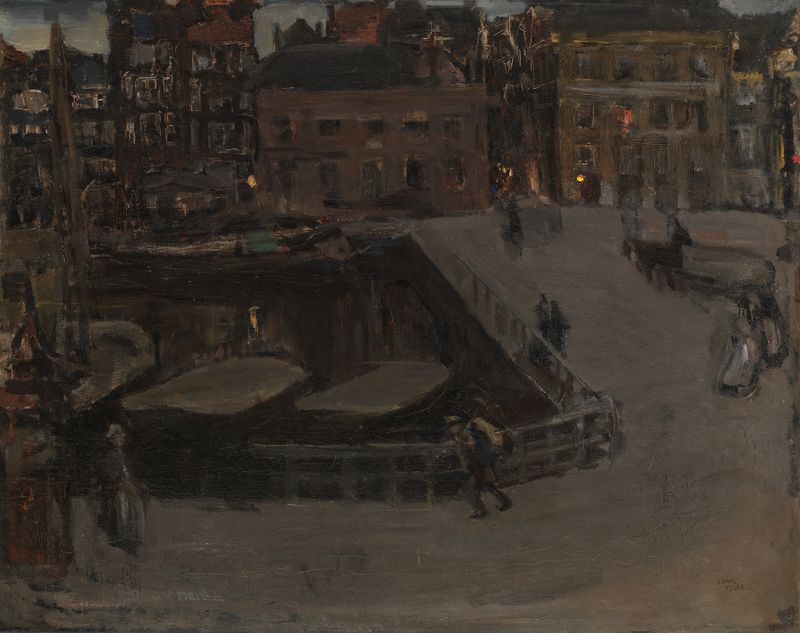
Strand bei Scheveningen — History & Facts
When did color learn to lie? In Strand bei Scheveningen, hues beckon with warmth, yet they whisper tales of longing and solitude, inviting the viewer into a world tinged with melancholy. Focus first on the sweeping expanse of the beach, where a muted palette of sandy browns and cool blues draws you into the horizon. The light dances across the water’s surface, creating a shimmering path that feels both inviting and elusive. Notice the figures dotting the shore, their postures a delicate mix of relaxation and introspection, seemingly lost in the rhythm of the waves.
The brushwork captures fleeting moments, with soft strokes evoking a gentle breeze that seems to carry away unspoken thoughts. Dive deeper into the emotional currents at play as you observe the juxtaposition of the vibrant sea and the subtly somber tones of the sky. The distant clouds loom like uninvited guests, hinting at impending change and a sense of unease. Each figure, though painted with a light touch, conveys an underlying solitude that resonates universally, as if they are part of a larger narrative of human experience, longing for connection amid the expanse. Isaac Israëls painted Strand bei Scheveningen between 1915 and 1919, a period marked by the shadows of World War I.
Living in the Netherlands, Israëls reflected the disquiet of his surroundings through his art, finding solace in the everyday scenes of beach life. This piece encapsulates his transition into modernism, navigating between the traditional and the contemporary while exploring themes of isolation amidst the collective human condition.