Street of the Sharouri, Cairo — History & Facts
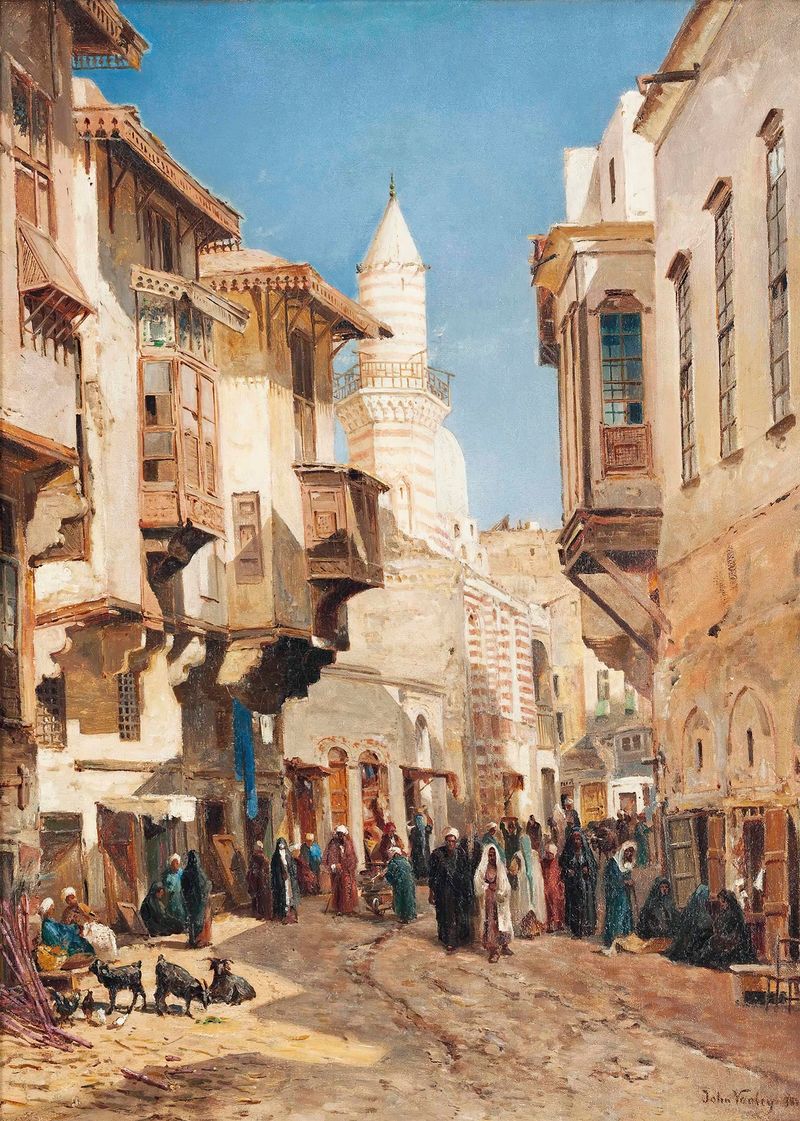
In the vivid layers of a city, obsession dances through the streets, beckoning the gaze of the observer. Focus first on the vibrant hues of the marketplace. Look to the left at the rich, earthy tones of the buildings, grounding a scene alive with energy. Notice how the artists’ brushstrokes pulse with life—each stroke encapsulating a fleeting moment of daily life.
Varley’s colors swirl together, creating a harmony that envelops both the viewer and the bustling atmosphere depicted. The interplay of light and shadow accentuates the textures of the cobblestones and the figures, inviting you deeper into the very fabric of Cairo. Yet beneath the surface, contrasts weave a complex narrative—between the lively crowd and the stillness of the architecture, between the vibrancy of the market and the solemnity of its historical backdrop. The figures, while animated, each wear expressions that suggest an unspoken story, creating an emotional tension that resonates through the composition.
Here lies a fleeting obsession: the relentless pursuit of daily existence against the backdrop of cultural richness, an echo of what stirs beneath the vibrancy of the scene. In 1880, while painting Street of the Sharouri, Cairo, Varley was in a period of exploration and expression, drawing inspiration from his travels across the Middle East. This was a time when Western artists began to delve deeper into Eastern cultures, influenced by a growing interest in exoticism. The canvas captures not only a moment in the bustling city but also reflects a broader artistic movement searching for authenticity amid colonial narratives and romanticized visions of the East.