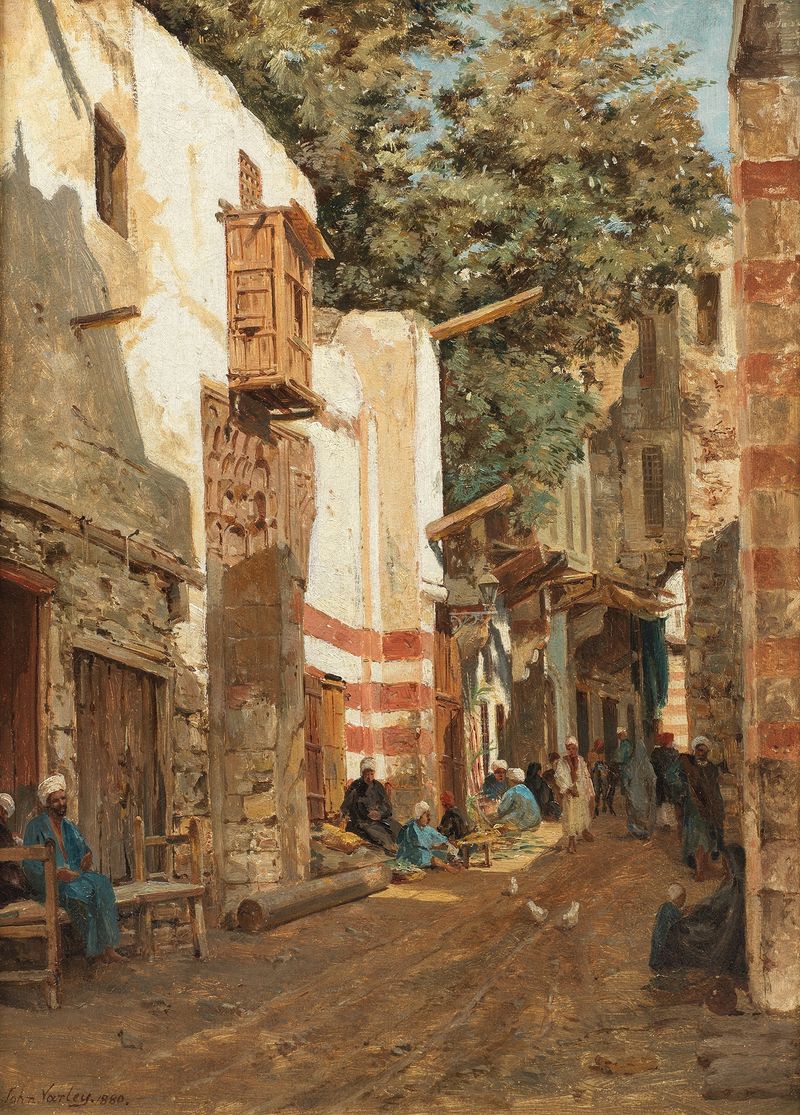
A bustling street before the mosque of Emir Mindar, Cairo — History & Facts
Can beauty exist without sorrow? In John Varley the Younger's A bustling street before the mosque of Emir Mindar, Cairo, we find a profound interplay between the vibrancy of life and the shadows of longing. The canvas bursts forth with colors that vibrate, capturing both the allure and the weight of the everyday. Look closely at the center of the painting, where the grand mosque rises majestically against the azure sky, its intricate patterns and domes drawing the eye immediately. The bustling street teems with life; merchants display their wares, while passersby, caught in conversation, animate the scene.
Notice how the warm golden hues of the sun bathe the figures in a soft glow, contrasting with the cool shadows beneath the awnings, a dance of light that evokes both warmth and the fleeting nature of human experience. Delve deeper, and you’ll uncover layers of meaning woven into the fabric of this lively tableau. The juxtaposition of the mosque's solemn architecture against the lively interactions of the people reflects a tension between the spiritual and the mundane. Each character carries their own story, their expressions a mixture of hope and weariness, revealing a vibrant community that thrives amidst unspoken struggles.
It is a bittersweet tableau of life, where joy and sorrow coexist in a delicate embrace. In 1880, Varley painted this scene amidst a period of exploration and fascination with the East, a time when many artists were captivated by foreign landscapes and cultures. Living in London while his contemporaries sought inspiration in diverse locales, Varley’s choice to depict this bustling Cairo street reveals not only his technical prowess but also a profound engagement with the world around him, echoing the broader cultural currents of the time.