Street Scene (Rue de village) — History & Facts
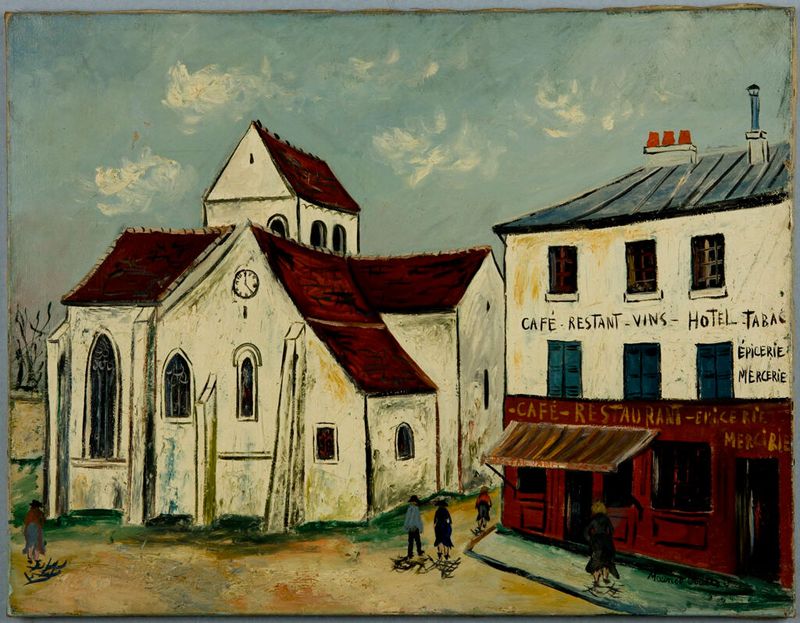
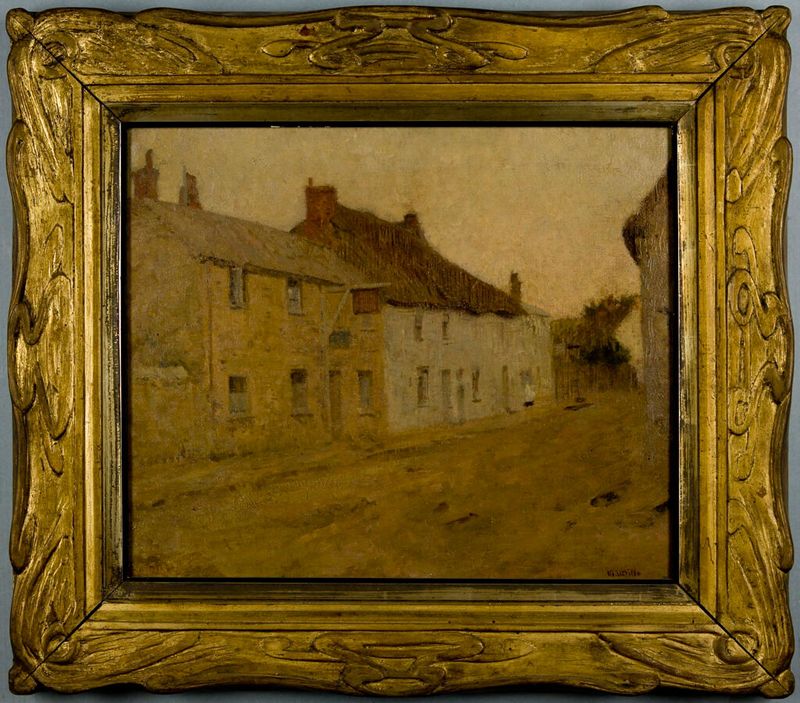
Did the painter know this moment would outlive them? In a world of fleeting chaos, serenity can be found in the quiet corners of life, captured forever on canvas. Look to the foreground, where a cobblestone street winds gracefully through a quaint village. Notice how the muted palette of blues and whites gives a soft, dreamlike quality to the scene. The buildings, their façades gently weathered, stand tall yet unpretentious, inviting the viewer into a narrative that feels both personal and universal.
Delicate touches of light filter through the trees, casting dappled shadows that dance across the pavement, while the gentle brushstrokes evoke a sense of calm amid the stillness. As you explore further, consider the juxtaposition of man-made structures and the natural world. The sturdy, grounded homes reflect the resilience of the human spirit, while the trees and sky suggest an ethereal, ever-changing existence. The absence of figures may amplify the meditative quality of the scene, allowing viewers to project their own stories and emotions onto the empty streets.
In this harmonious balance, one can feel the weight of time, where past meets present, inviting contemplation on fragility and permanence. Maurice Utrillo created Street Scene (Rue de village) in 1910 while living in Montmartre, a neighborhood that inspired much of his work. At this time, he was grappling with personal struggles and the effects of the Bohemian lifestyle, yet his art became a refuge and a testament to the beauty of everyday life. This painting reflects not only his talent for capturing urban landscapes but also the longing for peace in a turbulent era of artistic innovation.