Street Scene — History & Facts
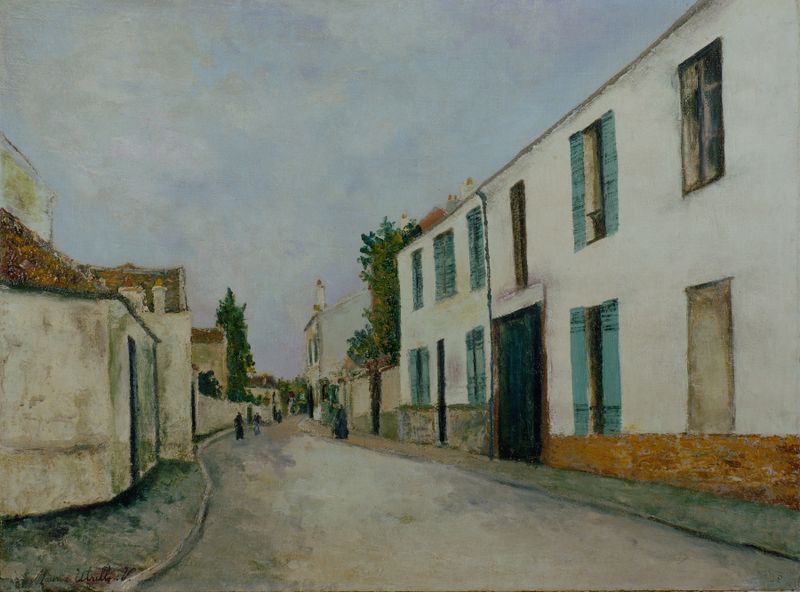
Could beauty survive in a century of chaos? In Street Scene, the invitation to observe lies in the balance between silence and the bustling life of the city, where stillness reigns amid the echoes of a busy world. Look to the left, where the soft pastel colors wash over the buildings, creating a serene backdrop that envelops the street. Your gaze is drawn to the delicate interplay of light and shadow, with the sun gently illuminating the facades, each brushstroke meticulously applied to evoke textures and depth. Notice how the cobblestones, uneven yet inviting, guide you through the scene, leading to the solitary figures who appear almost frozen in time, quietly existing within their own rhythms. Hidden within the canvas is a profound contrast between the vibrancy of urban life and the tranquility that Utrillo captures.
The figures, though central, are painted in muted tones, suggesting their marginalization within the hustle of the city. This duality invites contemplation on isolation against the backdrop of society’s relentless pace. Furthermore, the trees framing the street provide a sense of protection, as if nature quietly shelters the human experience from the chaos of modernity. In the early 20th century, while living in Montmartre, Utrillo painted Street Scene as he navigated his own struggles with mental health and alcoholism.
This period was marked by artistic experimentation, as the avant-garde movements flourished in Paris. The artist’s unique interpretation of urban landscapes during this time reflects not just his personal battles but also a broader commentary on the changing world around him, where beauty and silence coexisted amid turmoil.