
Stürmische Mondnacht im Gebirge — History & Facts
Can beauty exist without sorrow? In the quiet chaos of a stormy moonlit night, the allure of nature reveals itself through tension and decay. Look to the left, where the dark, brooding mountains rise like sentinels against the luminous moon. The swirling clouds dance across the sky, casting an ethereal glow that punctuates the landscape with stark contrasts of light and shadow. Notice how the palette of deep blues and grays dominates, with splashes of silver illuminating the jagged peaks, enhancing the sense of drama.
The composition draws the eye upward, inviting contemplation of the celestial realm while simultaneously grounding the viewer in the raw power of the earth. The emotional dichotomy in this artwork lies in the interplay between the serene beauty of the moonlight and the tumultuous energy of the storm. The fragile glow of the moon appears to weep for the mountains' weariness, suggesting that beauty is born from struggle. Patches of decay in the foreground hint at the passage of time, reminding us that nature's splendor is often accompanied by loss and transformation. Created at an uncertain moment in the 19th century, the artist found himself influenced by the Romantic movement, which celebrated the sublime aspects of nature.
Wagner painted amidst a growing interest in emotional expression and the natural world, reflecting a longing for connection in an era marked by industrial change. His depiction of the stormy night encapsulates both the turmoil of the landscape and the inner conflicts of humanity, woven together with an awareness of beauty's transient nature.
More Artworks by Johann Georg Wagner
Browse all →
Bauernhaus unter Bäumen an einer Weggabelung
Johann Georg Wagner
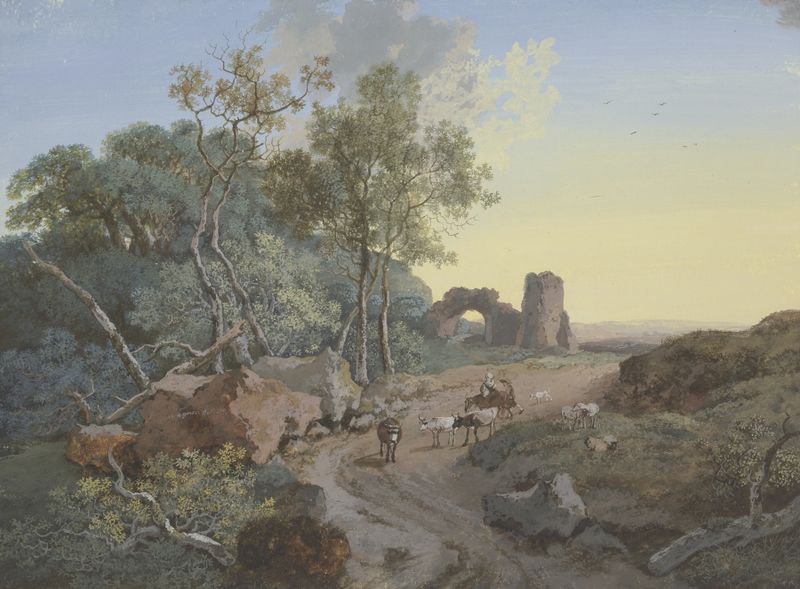
Waldpartie und Ruine mit einem Bogen an einem Weg mit Hirten und Vieh
Johann Georg Wagner
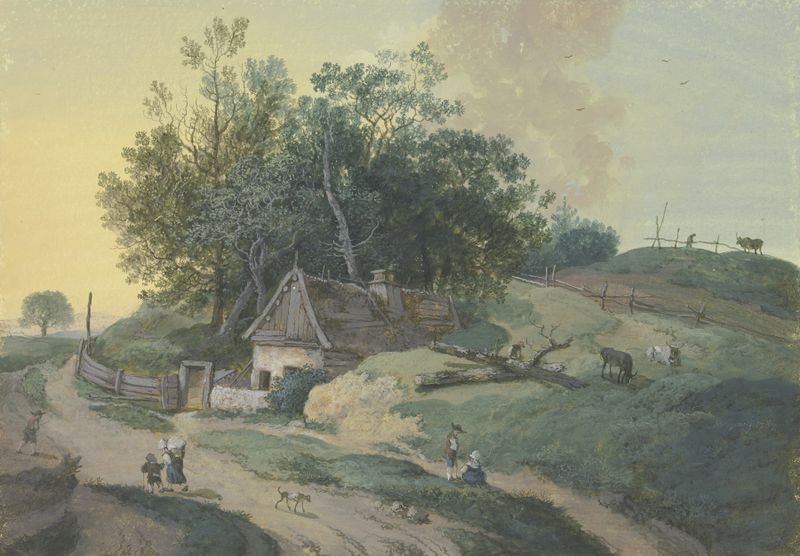
Bauernhaus am Weg unter Bäumen, Staffage von vielen Figuren und weidendem Vieh
Johann Georg Wagner
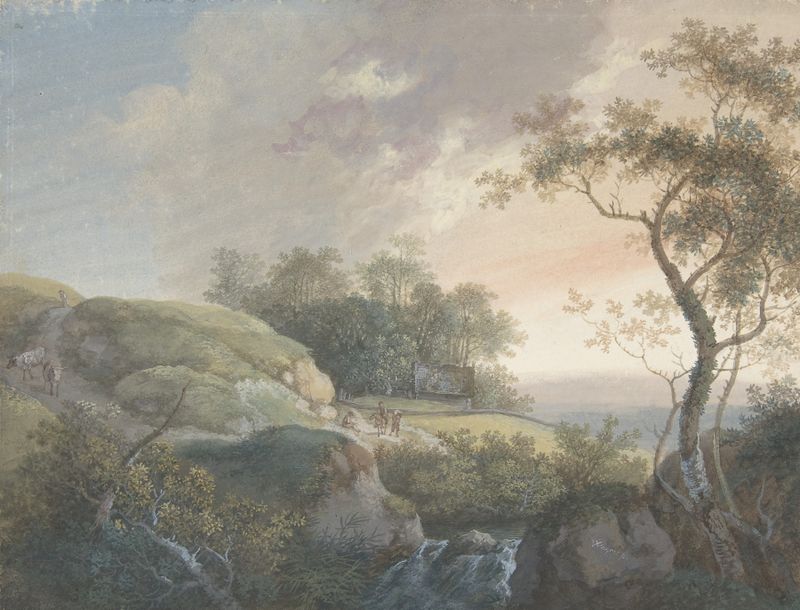
The Morning
Johann Georg Wagner

Waldlandschaft im Gebirge mit Herde und Gewässer
Johann Georg Wagner
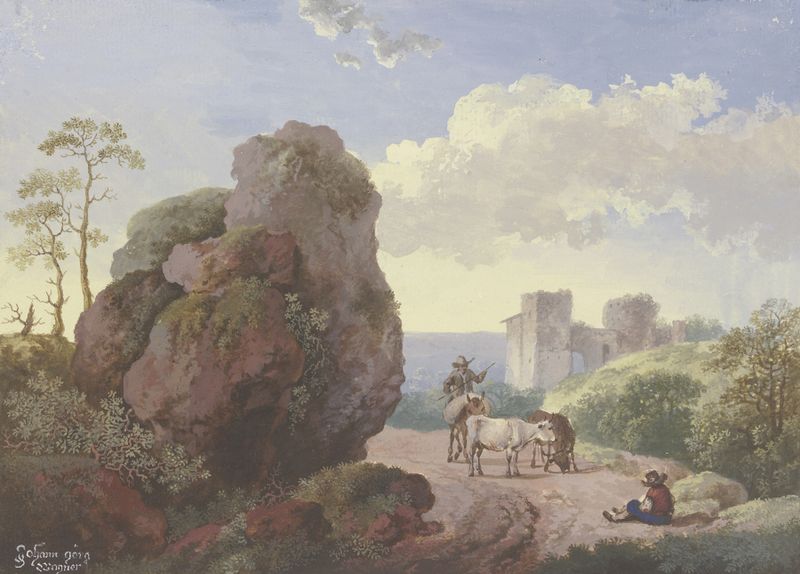
Ein großer Fels neben einem Weg mit Hirten und Vieh, rechts eine Ruine
Johann Georg Wagner

Burg auf einem Felsen über einem Flußtal
Johann Georg Wagner
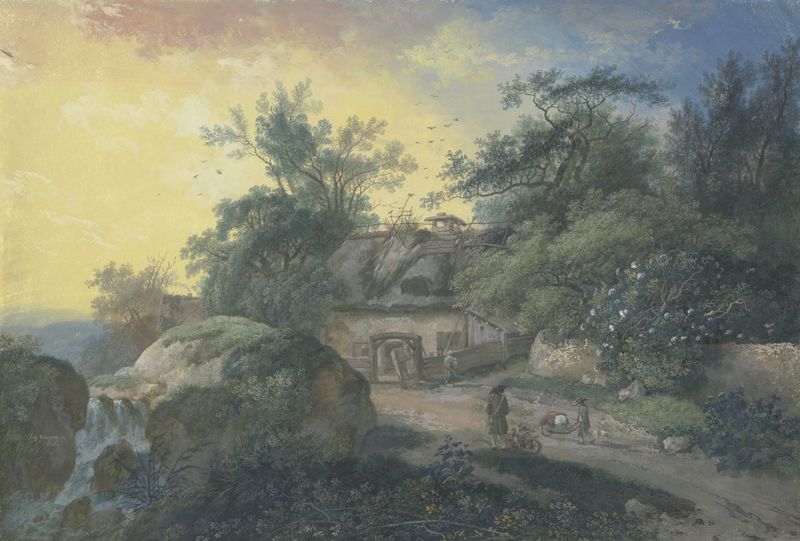
Bauernhof mit Staffagefiguren unter Bäumen bei einem blühenden Holunderbusch
Johann Georg Wagner





