
Waldpartie und Ruine mit einem Bogen an einem Weg mit Hirten und Vieh — History & Facts
What if silence could speak through light? In Waldpartie und Ruine mit einem Bogen an einem Weg mit Hirten und Vieh, the interplay of shadow and illumination narrates a tale of time suspended, inviting contemplation about the fleeting moments of life. Look to the left at the ancient, crumbling ruins that rise majestically, their weathered stones bathed in soft, golden sunlight. The archway invites the eye to wander deeper into a lush forested path, where figures of shepherds and grazing cattle blend seamlessly with the pastoral landscape. Notice the verdant greens and warm earth tones, each brushstroke meticulously placed to evoke a sense of tranquility and harmony, contrasting the enduring remnants of human architecture with the ephemeral beauty of nature. Hidden within this serene tableau lies a poignant exploration of the passage of time.
The juxtaposition of the crumbling ruin against the vibrant life of the landscape symbolizes the eternal cycle of decay and renewal. The gentle figures of the shepherds, engaged in their timeless duty, emphasize humanity’s enduring connection to the land, while the distant hills evoke a sense of continuity, hinting at the larger narrative of existence. This scene serves as a reminder of both the permanence of nature and the transience of human creations. In 1764, Johann Georg Wagner created this piece in a period marked by a burgeoning appreciation for the natural world within the realms of art.
As the Rococo style began to wane, artists were increasingly drawn to landscapes that captured the sublime beauty of rural life, reflecting the societal shifts of the Enlightenment era. Living in Germany during a time of both artistic exploration and political change, Wagner’s work manifests an intimate dialogue between humanity and nature that resonates profoundly to this day.
More Artworks by Johann Georg Wagner
Browse all →
Bauernhaus unter Bäumen an einer Weggabelung
Johann Georg Wagner
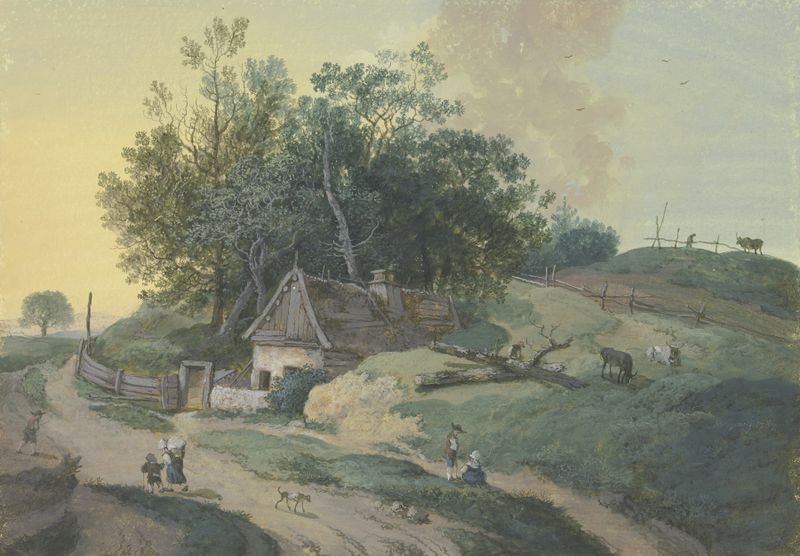
Bauernhaus am Weg unter Bäumen, Staffage von vielen Figuren und weidendem Vieh
Johann Georg Wagner
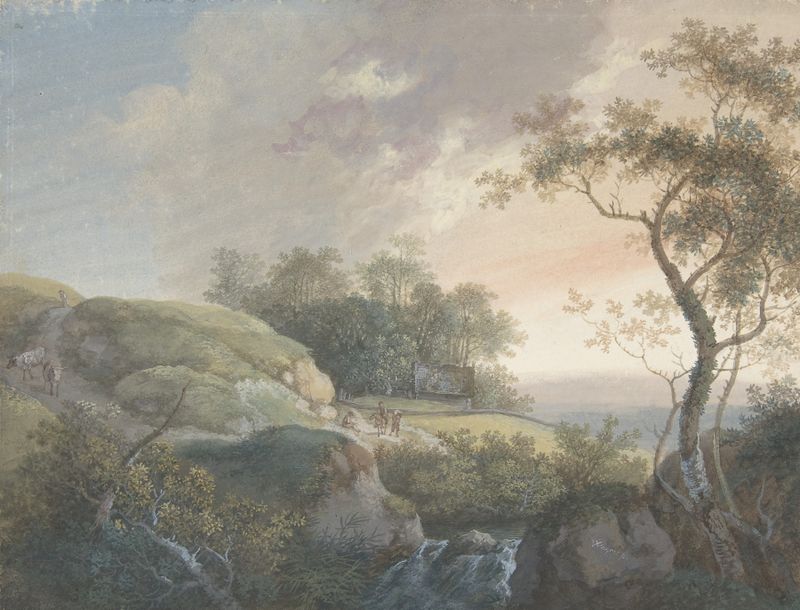
The Morning
Johann Georg Wagner

Waldlandschaft im Gebirge mit Herde und Gewässer
Johann Georg Wagner
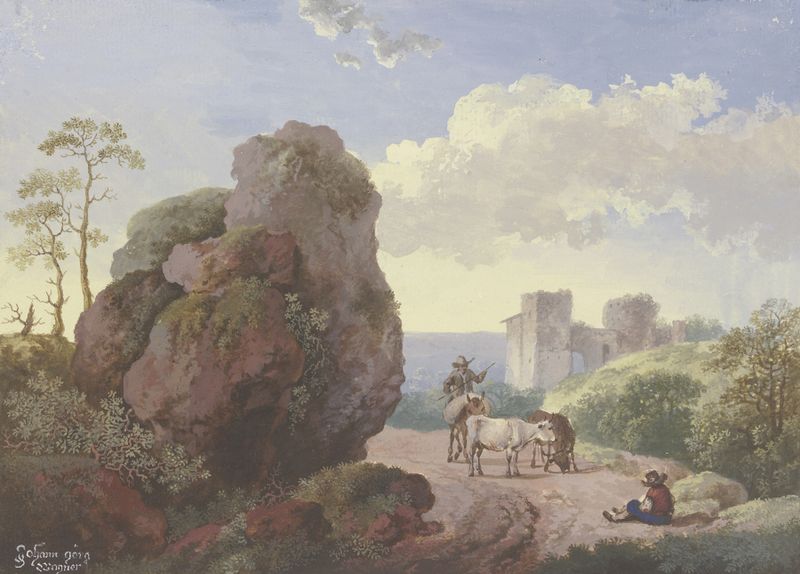
Ein großer Fels neben einem Weg mit Hirten und Vieh, rechts eine Ruine
Johann Georg Wagner

Burg auf einem Felsen über einem Flußtal
Johann Georg Wagner
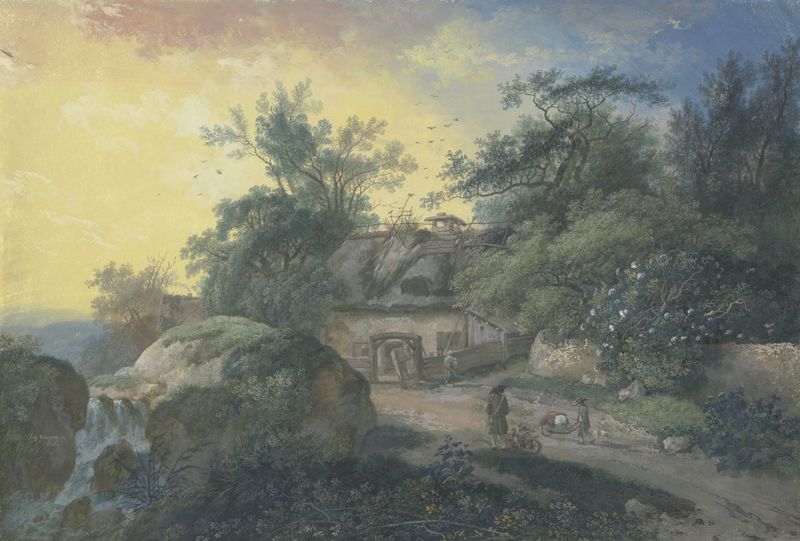
Bauernhof mit Staffagefiguren unter Bäumen bei einem blühenden Holunderbusch
Johann Georg Wagner
Stürmische Mondnacht im Gebirge
Johann Georg Wagner





