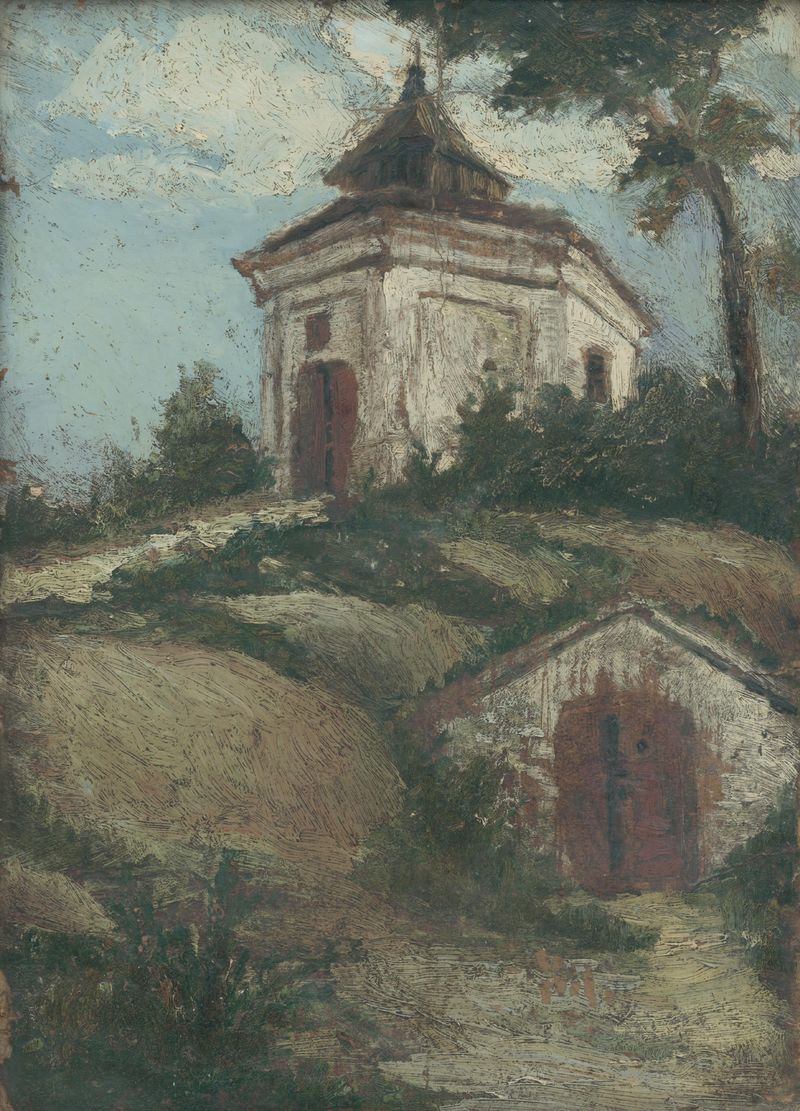
Stromy pri plote — History & Facts
In a world where fragility reigns, the unspoken whispers of the heart linger in the shadows. Look to the left at the delicate strokes that form the outline of the weathered fence, its wooden slats embodying both strength and vulnerability. The muted earth tones envelop the canvas, casting an aura of nostalgia as they dance harmoniously with the wildflowers that burst forth at the base. Notice how the gentle play of light filters through the gaps, illuminating the scene and emphasizing the contrast between the static fence and the lively flora, creating a dialogue between permanence and transience. Each detail carries weight; the flowers, with their soft petals, almost seem to sigh as they lean towards the fence, seeking connection yet remaining in their isolated beauty.
This tension between the rigid structure of the fence and the fragile blossoms speaks to the fleeting nature of existence, inviting contemplation on the barriers we build and the life that yearns to flourish despite them. The painting captures a moment where nature and man-made boundaries coexist, highlighting the intricate dance of resilience and fragility. In 1905, Gejza Kukán painted this piece during a time of personal introspection and artistic evolution. Living in the vibrant cultural landscape of early 20th century Slovakia, he was influenced by both Impressionism and the burgeoning Modernist movement.
This period marked a transition in his work, as he sought to explore emotional depth and the relationship between humans and their environment, capturing the essence of fragility in a rapidly changing world.