
Studie naar een laat-klassieke mannenkop — History & Facts
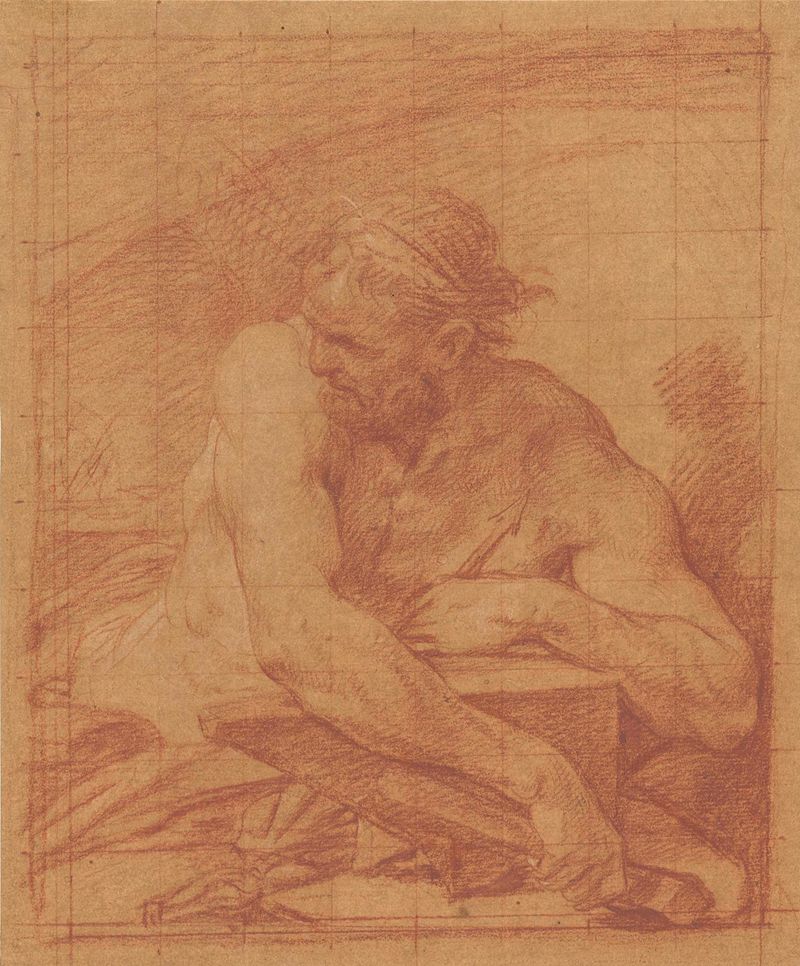
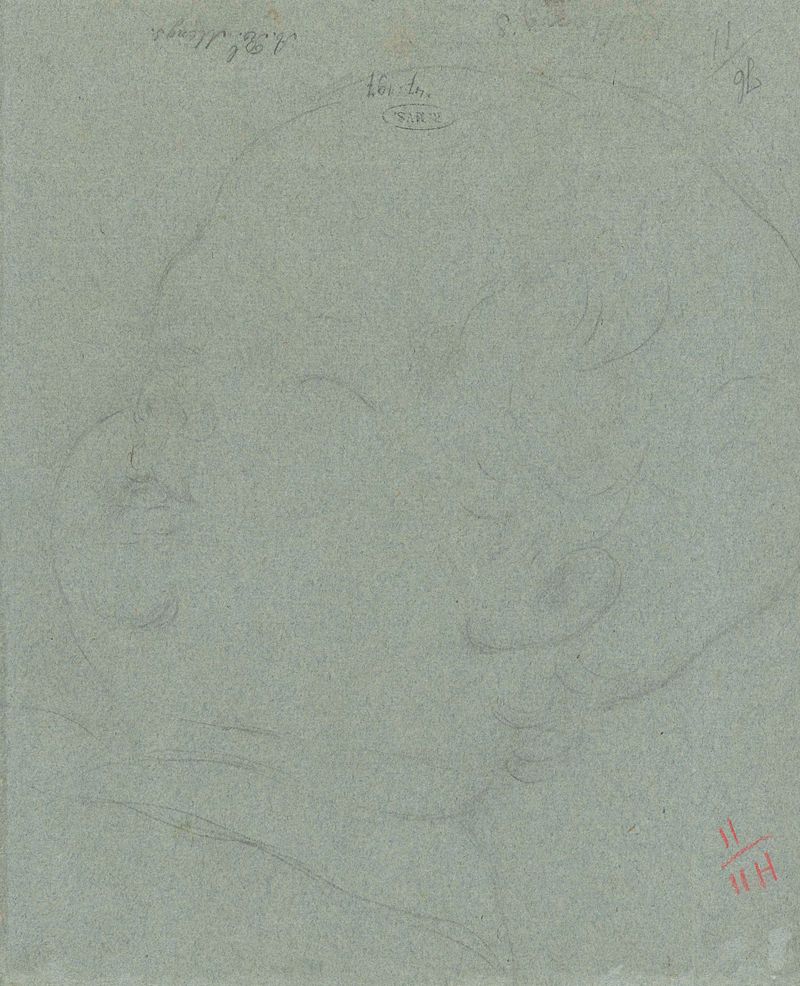
This idea resonates deeply within the realms of artistry, where creation often wrestles with the shadows of inner turmoil. Focus first on the gazing eyes of the subject, which seem to hold a universe of emotion. Notice how the light delicately caresses the contours of the face, creating a play of highlights and shadows that bring an exquisite depth. The rich, earthy palette evokes both warmth and quiet melancholy — browns and ochres intertwine, while the subtle hints of light reflect the artist’s understanding of human anatomy and emotion. The tension here lies in the contrast between the serene expression and the strong, chiseled features.
Each line and shadow seems to tell a story of strength tempered by vulnerability. One can't help but feel that this portrayal of masculinity is not merely about physical beauty; it embodies the complexities of human experience, merging creation with the innate struggles that often accompany it. During the years 1738 to 1779, Mengs was immersed in the vibrant artistic dialogue of Europe, influenced by both classicism and the emerging neoclassicism. Living in Rome, he navigated the convergence of tradition and innovation, drawing inspiration from antiquity while establishing himself as a critical figure in the evolving landscape of Western art.
His works from this period highlight a commitment to exploring the human form, transcending mere representation to delve into the emotional depths of his subjects.
More Artworks by Anton Raphael Mengs
Browse all →

More Portrait Art
Browse all →
Las meninas
Diego Velázquez

Self-portrait with a Bandaged Ear and Pipe
Unidentified artist

Girl with a Pearl Earring
Johannes Vermeer

The Sampling Officials of the Amsterdam Drapers’ Guild, Known as ‘The Syndics’
Rembrandt van Rijn

The Hundred Guilder Print: the man seen on the back in the lower left corner
Rembrandt van Rijn

Portrait of Dr Gachet
Vincent van Gogh