
Studie van een huis van baksteen — History & Facts
In the realm of architecture and color, the heartbeat of a home resonates deeply, whispering stories of lives nestled within its walls. Look closely at the textured layers of the brick facade; they invite you to explore the intricate details of craftsmanship. Notice how the artist captures the play of light against the warm hues—golden ochres and earthy reds—that breathe life into the structure. The composition is grounded yet elegant, drawing the eye towards the doorway, an invitation to the world beyond, while the surrounding landscape subtly frames this intimate scene. Beneath the surface, the painting reveals a dialogue between permanence and transience.
The sturdy bricks signify resilience, yet the dappled shadows hint at the passage of time, suggesting that every moment is fleeting. There is a juxtaposition here: the solidity of the house contrasted with the ephemeral nature of human experience. Each brushstroke seems to hold a collective memory, evoking a sense of nostalgia and awakening within the viewer's own reflections on home. Hendrik van der Burgh created this piece in the late 18th to mid-19th century, a period marked by the rise of Romanticism and a shift towards individual expression in art.
Living in a time of significant social and political change, he sought to capture the essence of everyday life, focusing on architecture as a means of connection and identity. This painting stands as a testament to his meticulous observation and the cultural currents that inspired him.
More Artworks by Hendrik van der Burgh
Browse all →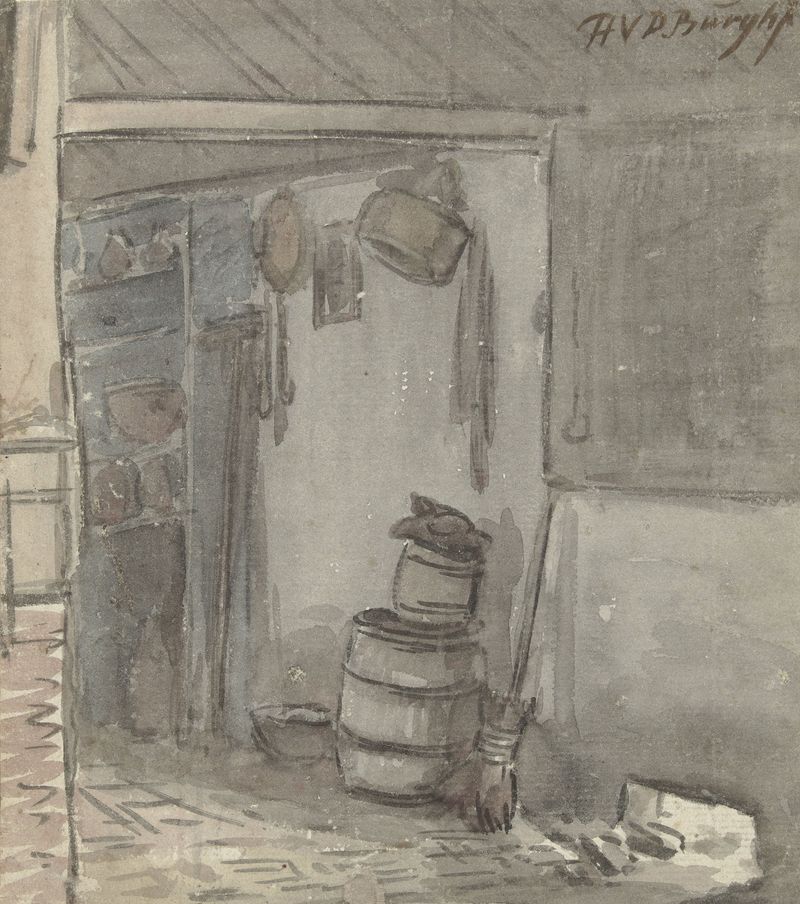
More Architecture Art
Browse all →
The statue of Liberty
Frédéric Auguste Bartholdi

View of Houses in Delft, Known as ‘The Little Street’
Johannes Vermeer

View of Houses in Delft, Known as ‘The Little Street’
Johannes Vermeer

The Cathedral in Rouen. The portal, Grey Weather
Claude Monet

The yellow house
Vincent van Gogh

The Church in Auvers-sur-Oise, View from the Chevet
Vincent van Gogh