Study for ‘View of New York City from New Jersey’ — History & Facts
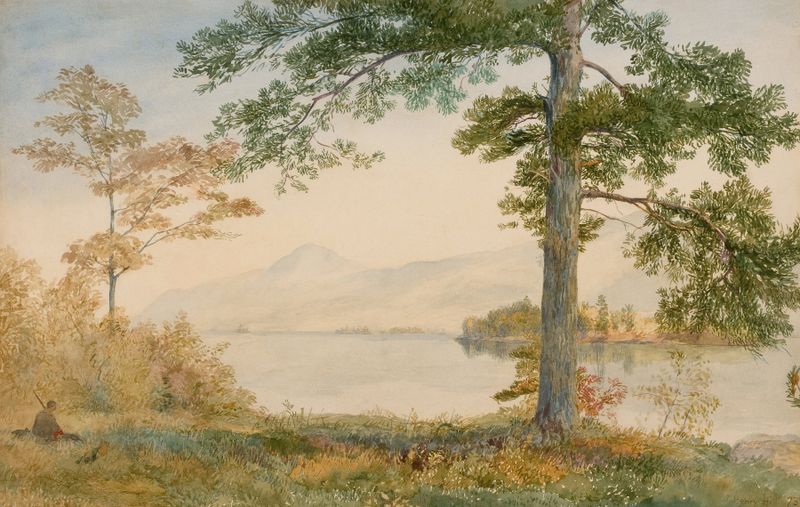
Could a single brushstroke hold eternity? In the delicate interplay of light and shadow, Study for ‘View of New York City from New Jersey’ captures a fleeting moment, inviting us into a world that is both timeless and vibrant with innocence. Look closely at the horizon, where the cityscape emerges from a soft haze. The artist has skillfully rendered the skyline in gentle pastels, allowing the pastel hues to seamlessly blend into one another, evoking the warmth of early morning. Notice how the sunlight dances across the water, illuminating the river's surface and creating a shimmering path that draws the eye toward the distant buildings.
It is here, amid the seemingly effortless brushstrokes, that a sense of quiet wonder permeates the canvas. As you explore further, consider the juxtaposition of nature and urban development. The foreground is filled with lush greenery, a reminder of the natural world existing alongside the encroaching city. These two elements—the flourishing trees and the burgeoning city—seem to engage in a silent conversation, reflecting the innocence of an era when industry and nature could coexist in harmony.
This balance of serenity and ambition captures the essence of a moment before the rapid transformation of the landscape. In 1857, Hill was immersed in the burgeoning art scene of New York, where the push for realism and the American landscape as subjects were gaining momentum. This period marked a time of transition, as cities grew and artists sought to document these changes while grappling with the idealization of the American landscape. Creating this study, Hill was not only observing but also participating in a conversation about identity, progress, and the innocence of a moment caught in time.