Study of a landscape for the painting “March to Siberia” — History & Facts
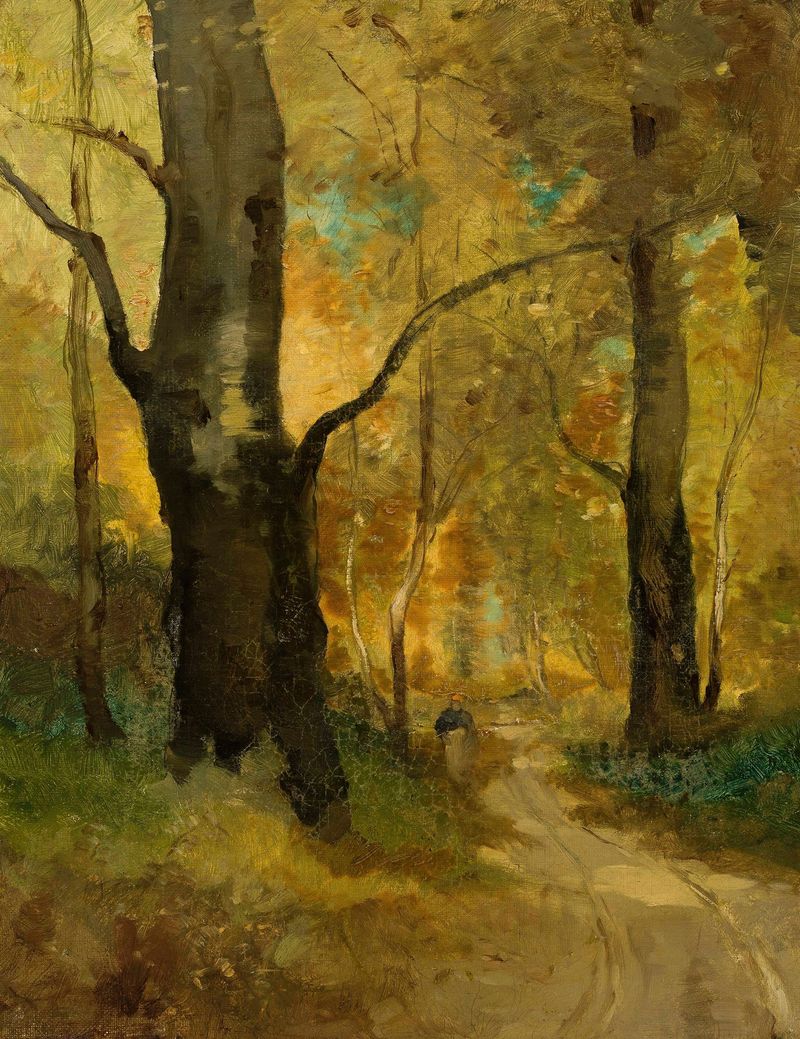
Can paint confess what words never could? In the delicate interplay of brushstrokes and hues, a landscape breathes, inviting contemplation on balance and equilibrium. Focus on the sweeping expanse of soft greens and blues that dominate the canvas, guiding your gaze toward a horizon that melds sky and earth. Notice the gentle, almost ethereal light that bathes the scene, creating an atmosphere of serene stillness. The careful arrangement of trees, hills, and shadows reveals a landscape that feels both familiar and distant, evoking a sense of longing for the natural world. Delve deeper into the subtle contrasts at play; the vibrant highlights against the muted background suggest a tug between life and desolation.
Small details, such as the delicate brushwork in the foliage, hint at the artist's emotional connection to the scenery, while the wide-open space speaks to the human desire for freedom. This duality captures the essence of existence — the constant struggle to find balance amidst shifting elements. In 1892, the artist found himself in a period of introspection and experimentation, creating this piece in Poland during a time of political and social upheaval. As he sought to define his voice amidst the evolving landscape of art, he turned to nature for inspiration, crafting works that reflected his inner thoughts and the broader cultural narratives of the time.