Study of a Landscape with a House — History & Facts
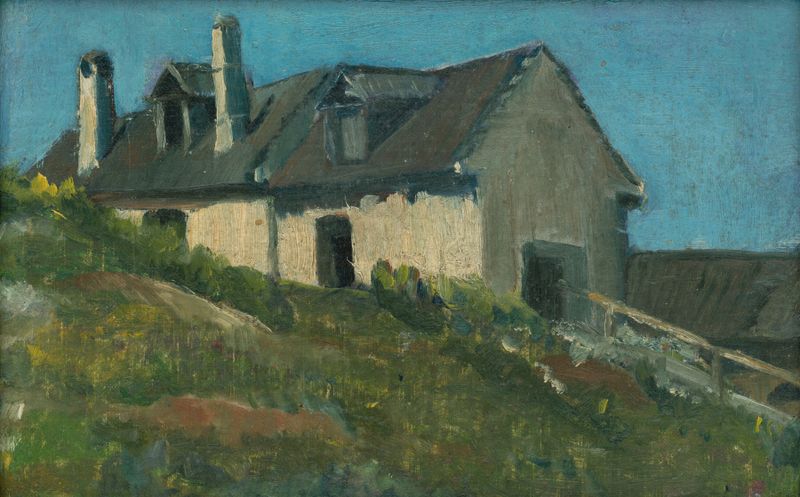
In a fleeting moment of solitude, the landscape unfolds like a whisper, inviting the viewer to pause and reflect on the melancholic beauty of existence. Start by looking at the center of the canvas, where a modest house nestles against a backdrop of rolling hills. The muted palette of greens and browns evokes an air of tranquility, while dappled light filters through a scattering of clouds, casting soft shadows that dance over the landscape. Notice how the artist's brushwork imparts a sense of movement in the foliage, subtly contrasting the stillness of the home, suggesting an underlying tension between nature and human presence. Delve deeper into this scene to discover the emotional depths it conveys.
The house, though quaint, appears somewhat isolated—a solitary figure amidst the expansive terrain. This juxtaposition speaks to themes of loneliness and nostalgia, evoking a longing for connection that resonates universally. The clouds looming overhead hint at the unpredictability of life, transforming the landscape into a metaphor for both shelter and vulnerability. Created in 1913, this work emerged during a period of immense change for Frida Konstantin, reflecting her personal struggles and the broader artistic movements of the time.
As she navigated her identity and the evolving world of modern art, the landscape became a canvas for her introspection, capturing not only the external environment but also the internal landscape of her soul.