Study of a tree — History & Facts
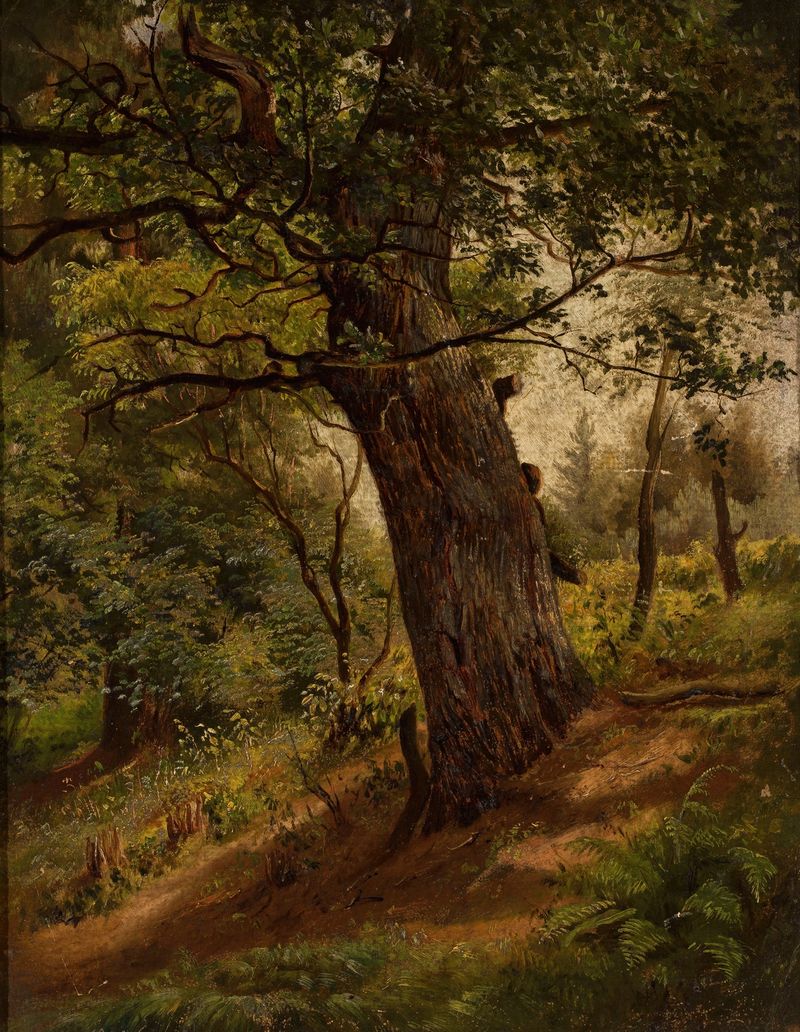
Did the painter know this moment would outlive them? The shadow of a single tree stretches gracefully across the canvas, whispering secrets of time, life, and decay. Look to the left at the meticulous brushstrokes that define the rugged bark, each knot and knotty detail revealing the artist's careful observation. Notice how the light dances through the leaves, creating a kaleidoscope of greens and golds, illuminating the delicate interplay between shadow and light. The tree stands proudly in the foreground, its gnarled limbs reaching out like ancient hands, while a gentle gradient of earth tones in the background grounds the composition and enhances the solemnity of the scene. In this solitary depiction, Bayer captures more than just a tree; he encapsulates resilience and solitude.
The juxtaposition of the radiant light and the darkening shadows evokes a sense of inevitable change—a reminder of nature’s cyclical existence. Each leaf, meticulously rendered, holds the weight of seasons passed, hinting at the stories intertwined with the tree's life. The thick shadows beneath the branches speak of both protection and concealment, inviting viewers to ponder what lies hidden beneath the surface. Created in 1861, this work emerged during a period when Bayer was deeply influenced by the German Romantic movement, focusing on nature's sublime beauty.
Living in a time of rapid industrialization, the artist sought solace in the natural world, capturing its essence with a reverence that resonated with many of his contemporaries. This study not only reflects his technical prowess but also his philosophical engagement with the environment surrounding him.