Study of a tree — History & Facts
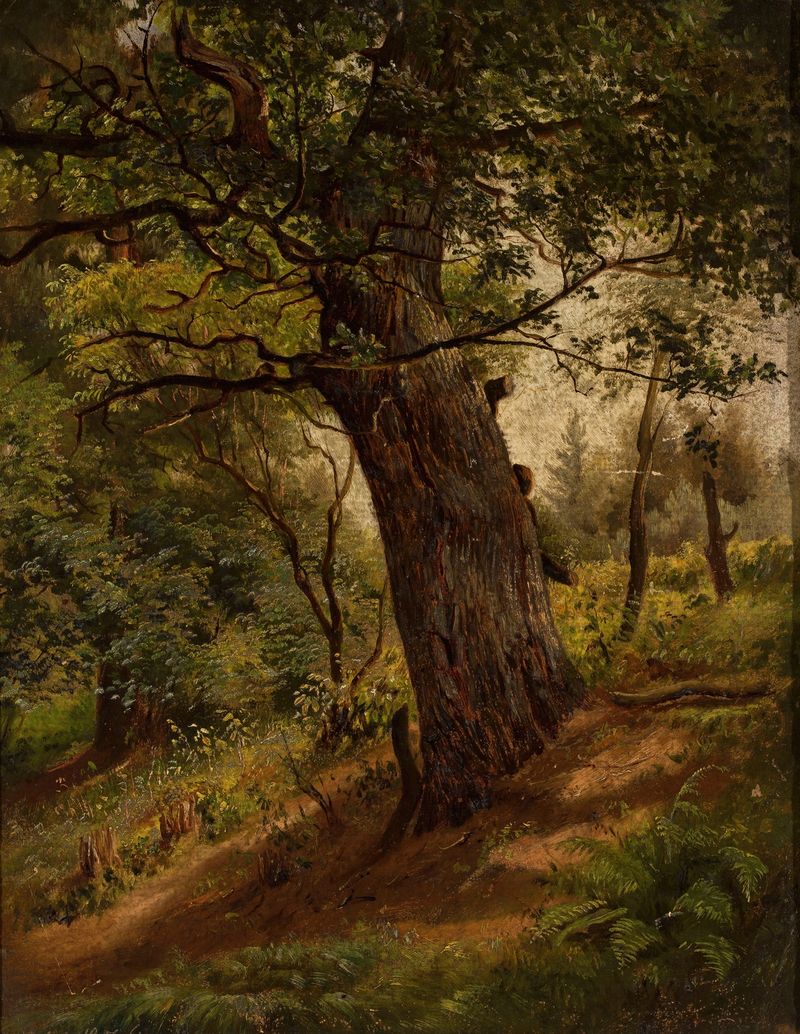
Could beauty survive in a century of chaos? Wilhelm Peter Bayer's Study of a Tree offers a contemplative answer, reflecting an unyielding obsession with nature's form and character amidst the tumult of the 19th century. Look closely at the gnarled trunk; its textured bark draws your eye, inviting you to trace the intricate lines and grooves that speak of age and resilience. Notice how the artist's delicate brushwork captures the interplay of light and shadow, revealing the tree's limbs as they stretch towards the sky, bathed in a soft, golden hue. The color palette, muted yet rich, evokes a sense of nostalgia, grounding the viewer in the gentle embrace of nature. The emotional tension in this piece lies in the tree's duality—both a solitary figure and a symbol of endurance.
While the surrounding darkness hints at encroaching chaos, the tree stands defiantly, an emblem of beauty that persists despite adversity. The contrasts of light and shadow not only enhance its physical attributes but also evoke a deeper resonance, signaling the struggle for survival and the quiet insistence of life against the backdrop of a rapidly changing world. Created in 1861, Bayer's work emerged during a period marked by industrialization and socio-political upheaval in Europe. As he painted, the art world was grappling with new movements and philosophies, reflecting a tension between romantic idealism and a looming realism.
This context surely informed his singular focus on the elegance of nature, which provides a poignant counterpoint to the chaos surrounding him.