Sturm und Regen — History & Facts
In the tumult of existence, hope lingers like light breaking through thick clouds, daring us to embrace its warmth. Look to the center of Sturm und Regen, where swirling storms of deep blues and greys collide with flashes of vibrant yellow and white. The canvas vibrates with movement, coaxing your eye to trace the chaotic dance of the elements. Notice how the tempestuous brushstrokes evoke both dread and exhilaration, suggesting the turmoil of nature while hinting at a brighter dawn.
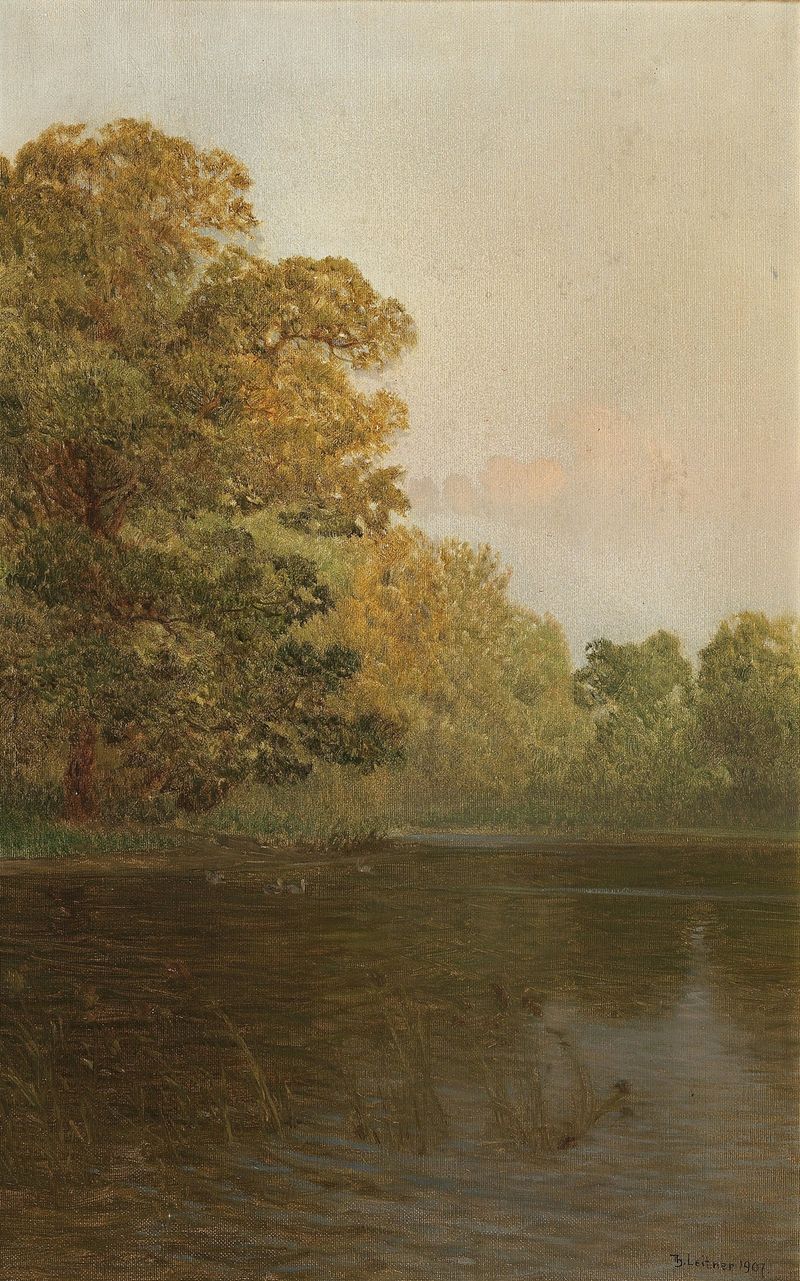
The interplay of dark and light creates a tension that pulls you deeper into the artwork’s emotional core. Within the tumult lies a profound contrast; the darkness represents struggle and despair, while the bright highlights hint at resilience and the promise of renewal. Each stroke captures the intensity of a fleeting moment, reminiscent of a heartbeat, filled with both anxiety and hope. The storm is not merely chaotic; it suggests a transformative power, revealing that growth often emerges from life’s most challenging circumstances. Leitner created Sturm und Regen in 1907 against the backdrop of a rapidly changing Europe, shaped by social upheaval and artistic experimentation.
This period marked his deep engagement with the expressive potential of color and form. The artist sought to convey not just the external forces of nature but also the internal emotional landscapes of humanity — a poignant reflection of both personal and collective experiences during those transitional years.