Suicide’s grave — History & Facts
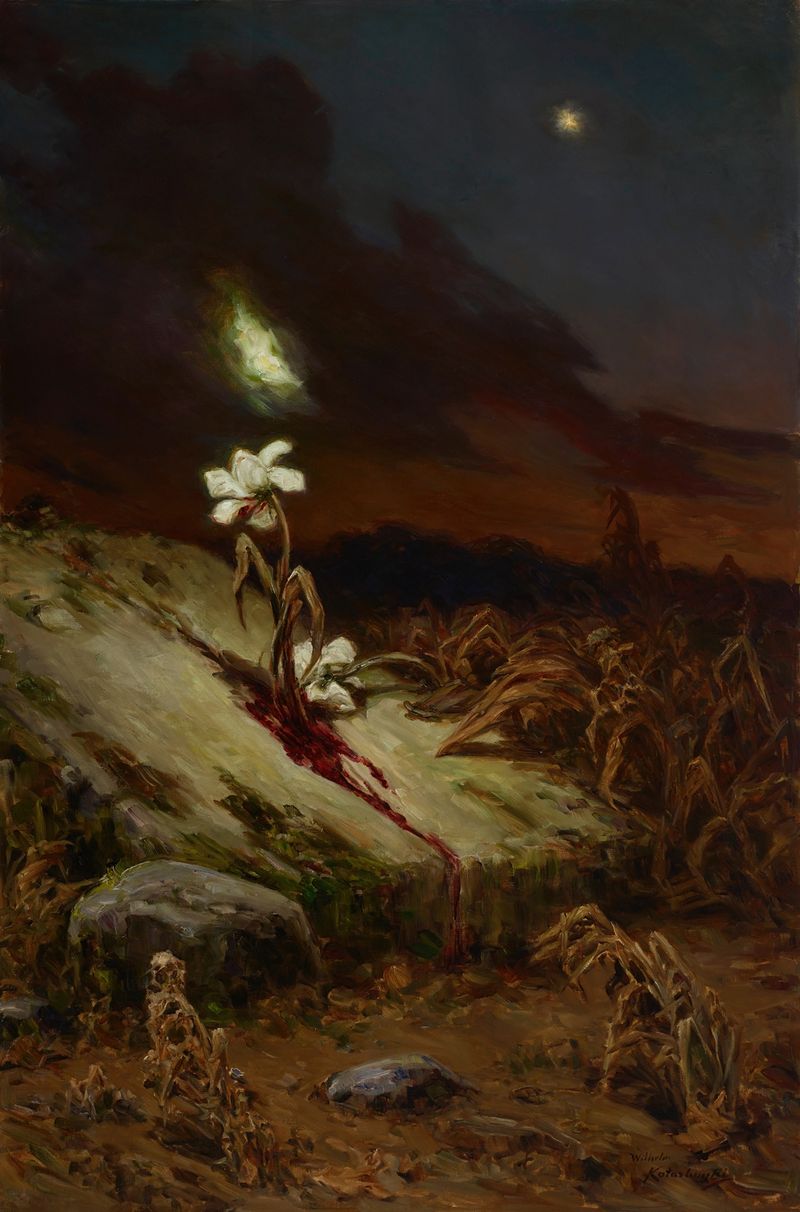
Who listens when art speaks of silence? In Suicide’s grave, the weight of despair is captured in muted tones, a stark reminder of humanity’s fragility amidst the chaos of revolution. Focus on the center of the composition, where a solitary figure lies in repose, swallowed by shadow. The deep greens and browns envelop them, while the pale skin starkly contrasts the earth around. Notice how the light catches the contours of their face, revealing a haunting serenity that cloaks the turmoil of their final moments.
The surrounding landscape, rugged and unyielding, accentuates the stillness of the scene, inviting the viewer to pause and reflect. As you absorb this poignant tableau, consider the emotional tension between the figure’s repose and the harsh environment, suggesting a struggle between inner peace and outer chaos. The contrast between life and death is pronounced, invoking a visceral understanding of loss and the impact of societal upheaval. Each brushstroke conveys a depth of sorrow, serving as a silent echo of the unseen lives affected by the tumultuous period of change. In 1900, Wilhelm Kotarbiński was navigating a personal and professional evolution in a rapidly transforming Europe, reflected in the turmoil of the political landscape.
The rise of revolutionary ideals clashed with traditional norms, influencing his artistic narrative. This painting emerged during a time when artists grappled with profound societal shifts, seeking to articulate the complexities of human experience through their work.