Summer Evening — History & Facts
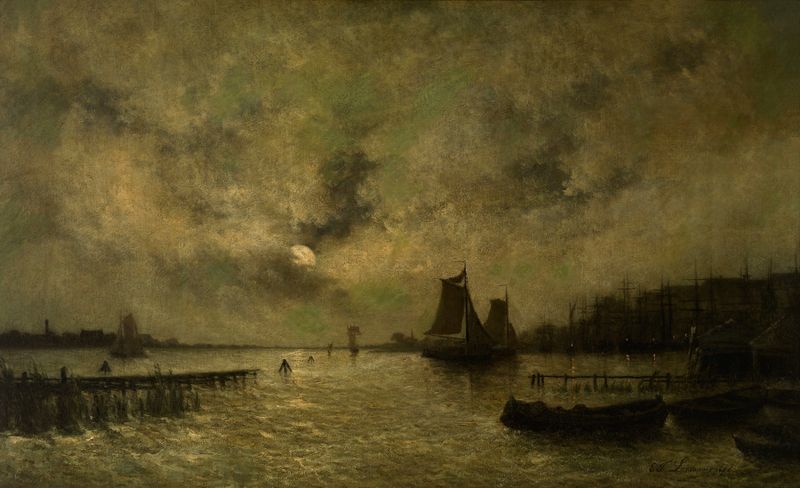
Who listens when art speaks of silence? In the serene stillness of Summer Evening, an unspoken dialogue unfolds, inviting viewers into a reflective embrace of nature’s beauty and the quiet moments that nourish the soul. Look to the center of the canvas, where twilight descends gently over a tranquil landscape. The soft hues of lavender and gold seamlessly blend, capturing the fleeting essence of a day giving way to night. Notice how the brushwork meanders like whispers across the surface, each stroke breathing life into the foliage and water below.
The light, diffused yet warm, caresses the scene, drawing your gaze to the delicate interplay between the sky and the earth, evoking a profound sense of calm. As you explore deeper, consider the contrast between the vibrant warmth of the sunset and the cool shadows that begin to stretch across the land. This duality speaks to the transition of time and the profound beauty found in moments of change. The soft ripples in the water reflect not only the fading light but also the inner stillness of the viewer, conjuring feelings of nostalgia and hope.
Here, nature becomes a canvas for introspection, inviting a conversation about the passage of our own experiences. Created during an undated phase of Egide François Leemans' career, Summer Evening embodies the artist’s dedication to capturing the tranquility of rural life. While the precise context of its creation remains elusive, Leemans was known for his serene landscapes that celebrated the natural world, contributing to the rich tapestry of 18th-century Flemish art where light and atmosphere played pivotal roles.