The Koolvliet in Antwerp — History & Facts
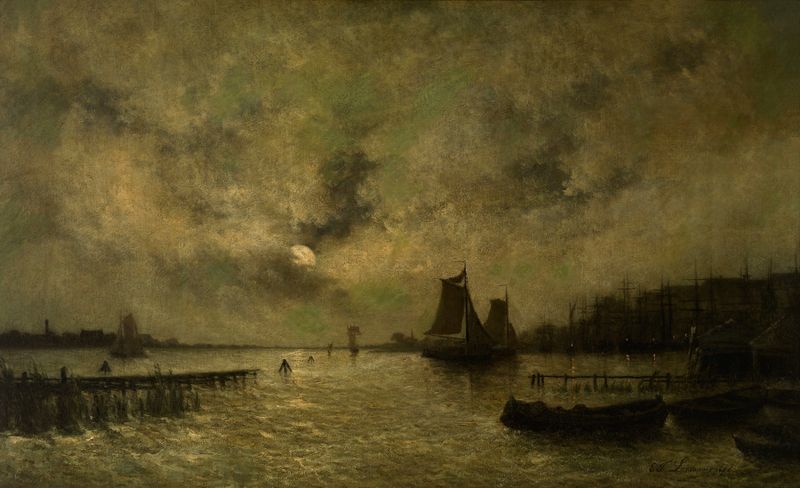
In the quietude of urban landscapes, remnants of life and decay whisper tales long forgotten. The beauty lies not in the vibrancy of what was, but in the stillness of what remains. Look to the left at the skeletal trees standing guard over the canal, their bare branches stretching skyward against a muted sky. Notice how the gentle ripples of the water reflect the somber hues of gray and brown, casting a melancholic tone over the scene.
The composition draws you in, leading your gaze along the water’s edge, where the remnants of buildings stand like shadows, suggesting a narrative of time's passage. The delicate brushwork conveys both the intricacy of nature and the erosion of man-made structures, celebrating decay as a form of beauty itself. Amidst this composition, the juxtaposition of life and desolation reverberates. The barren trees symbolize resilience amid decay, while the canal acts as a mirror, reflecting both the physical and emotional weight of time.
The subtle play of light dances across the water's surface, hinting at the transient nature of existence, as if to remind us that beauty can thrive even in the remnants of the past. Each element serves as a poignant reminder that decay is not merely an end, but a profound transformation. Created during an era when urban landscapes were rapidly changing, this artwork emerged from the mind of an artist deeply attuned to the complexities of his surroundings. Leemans worked in Antwerp, a city grappling with industrial growth and the loss of its historical essence.
The emotional layers within this piece reveal not only his personal observations, but also the collective experience of a society caught between nostalgia and the relentless march of progress.