Summer evening at the South beach, Skagen. Anna Ancher and Marie Krøyer (study) — History & Facts
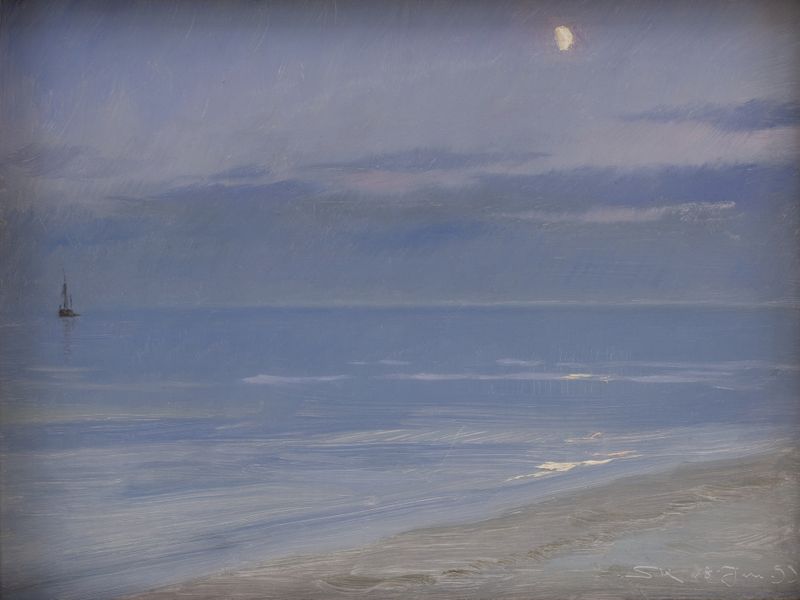
Who listens when art speaks of silence? In the gentle embrace of twilight, a moment hangs suspended, pregnant with the promise of awakening. Focus on the soft play of light as it kisses the figures in the foreground, illuminating the delicate contours of their faces. Look closely at the women seated on the sand, their gauzy dresses whispering against the cool sea breeze. The horizon, a palette of pastel pinks and deep blues, hints at the day's imminent departure while the light dances across the surface of the waves, beckoning the viewer into the serene atmosphere. Yet within this tranquil scene, a tension simmers beneath the surface.
The juxtaposition of the women’s stillness against the restlessness of the ocean embodies a profound contemplation of time itself. The subtle expressions on their faces convey an unspoken dialogue, perhaps pondering the transition from day to night, echoing the fleeting nature of summer and youth. Each thoughtful gesture reveals layers of introspection, inviting viewers to reflect on their own moments of quiet revelation. Peder Severin Krøyer created this work in 1893 while living in the idyllic coastal town of Skagen, Denmark, where he was part of an artist colony embracing the natural light of the North.
At this time, Krøyer was experiencing both personal and professional highs, navigating the burgeoning Impressionist movement in Europe. His exploration of light and atmosphere marked a significant evolution in his style, capturing fleeting moments that resonate with timelessness and invite contemplation.