Fishermen On The Beach At Skagen — History & Facts
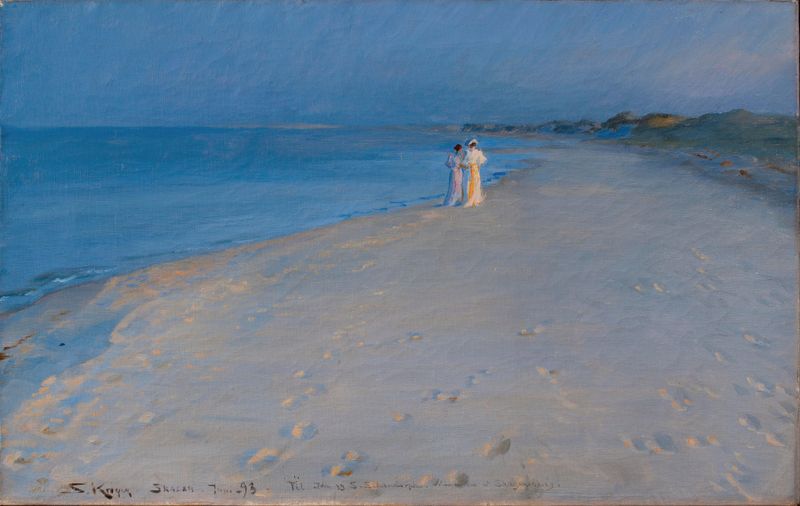
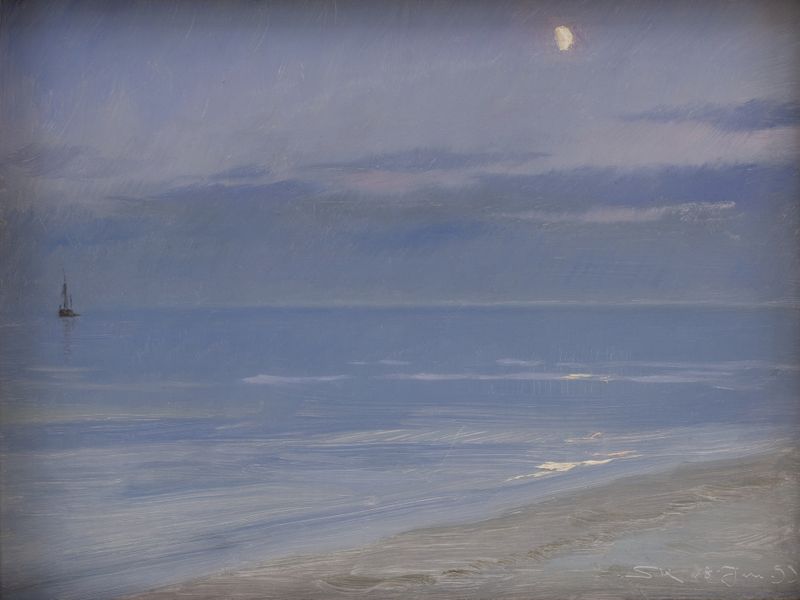
In the gentle embrace of twilight, where the horizon blurs between sea and sky, the passage of time whispers through the figures on the shore. Each fisherman, silhouetted against the fading light, embodies both resilience and the fragility of existence. The rhythmic pulse of the waves serves as a reminder of life’s relentless march, a silent dance with mortality itself. Look closely at the fishermen, their weathered faces telling stories of toil and perseverance.
Focus on the interplay of light and shadow that captures the golden hues of dusk, casting a serene glow on their labor. Notice how the delicate strokes of the brush breathe life into their surroundings, blending the blue of the sea with the soft warmth of the sand. The composition draws the eye inward, creating a harmonious balance that mirrors the unity of man with nature. Within this tranquil scene lies a poignant tension between the present moment and the inevitable passage of time.
The fishermen, engaged in their daily tasks, appear both anchored to the earth and caught in the ephemeral beauty of the light. The distant horizon evokes a sense of longing and the unknown, while the fleeting colors symbolize the transient nature of life. These elements converge to remind us of our mortality, urging reflection on the moments we often take for granted. In 1891, Peder Severin Krøyer painted this evocative scene in Skagen, Denmark, during a period marked by a burgeoning interest in naturalism and impressionism.
At this time, he was deeply influenced by the coastal light and vibrant community of artists that surrounded him. This work encapsulates his ability to blend emotion with realism, capturing a profound sense of humanity that resonates with viewers even today.