Summer Night — History & Facts
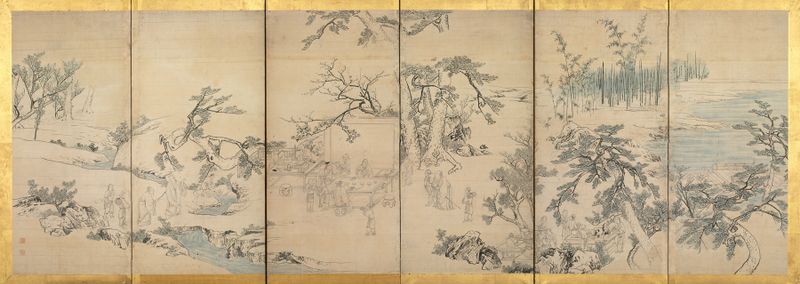
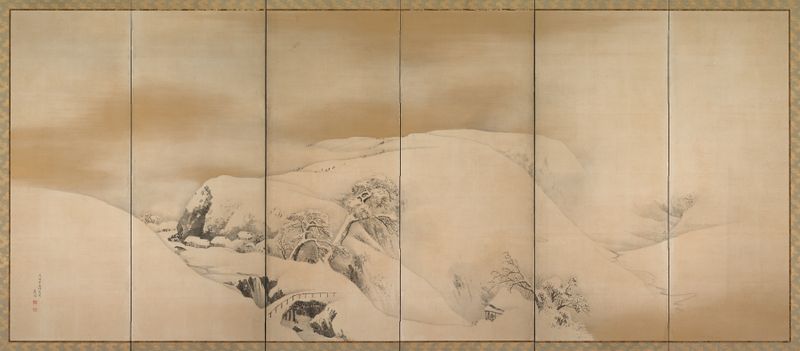
Can paint confess what words never could? In Maruyama Ōkyo's Summer Night, we find a profound longing that transcends the limits of language, capturing an emotion that resonates within the depths of the viewer's soul. Look closely at the delicate interplay of shadows and soft, shimmering light that envelops the serene landscape. The eye is drawn first to the moonlit water, where silvery reflections dance gently across the surface, creating a path leading into the tranquil night. Notice how the lush trees, with their rich greens and deep blues, frame the scene, evoking a sense of serenity tinged with an undercurrent of yearning.
The careful brushwork and harmonious palette invite viewers to linger, immersing them in a world where the beauty of nature elicits contemplation. Within this captivating setting lies a quiet tension. The stillness of the water suggests a moment frozen in time, yet the surrounding trees appear to whisper secrets—echoes of dreams unfulfilled. The contrast between the vibrant foliage and the calming moonlight hints at the duality of life: the beauty of the present moment intertwined with the ache of what could have been.
It is a meditation on the passage of time, as night retreats and dawn inevitably approaches, reminding us of the fleeting nature of our desires. In 1784, Maruyama Ōkyo created Summer Night during a period of great transition for Japanese art, as influences from the West began to permeate traditional styles. At this time, he was refining his unique approach to nature, blending realism with a poetic sensibility. The tension between tradition and innovation marked his work, inviting viewers to explore complex emotions through the lens of simple yet profound scenes.