Summer night at Tönning — History & Facts
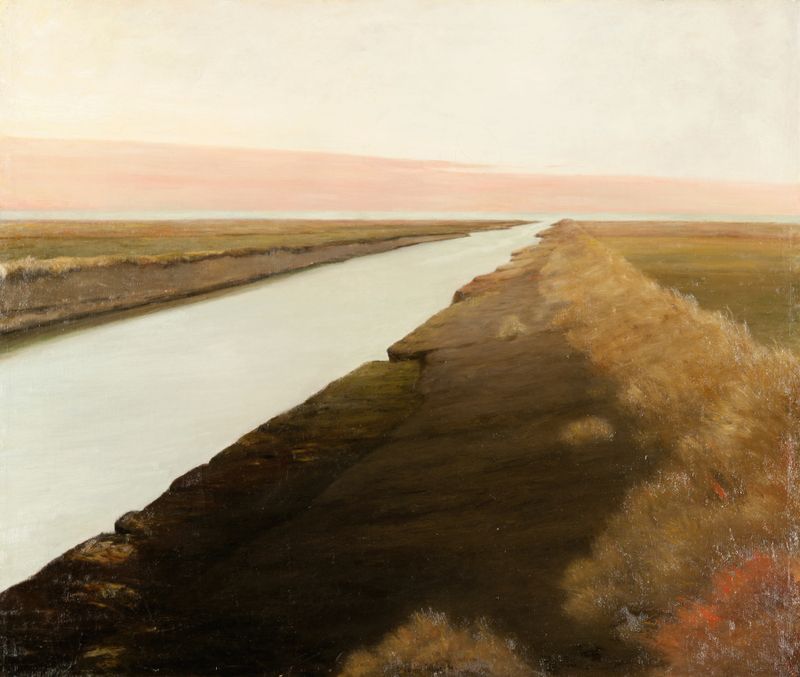
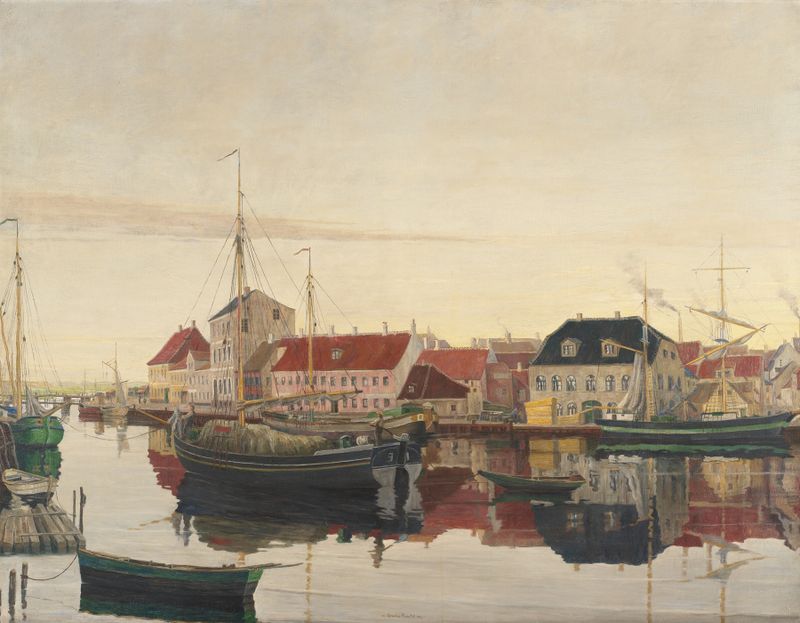
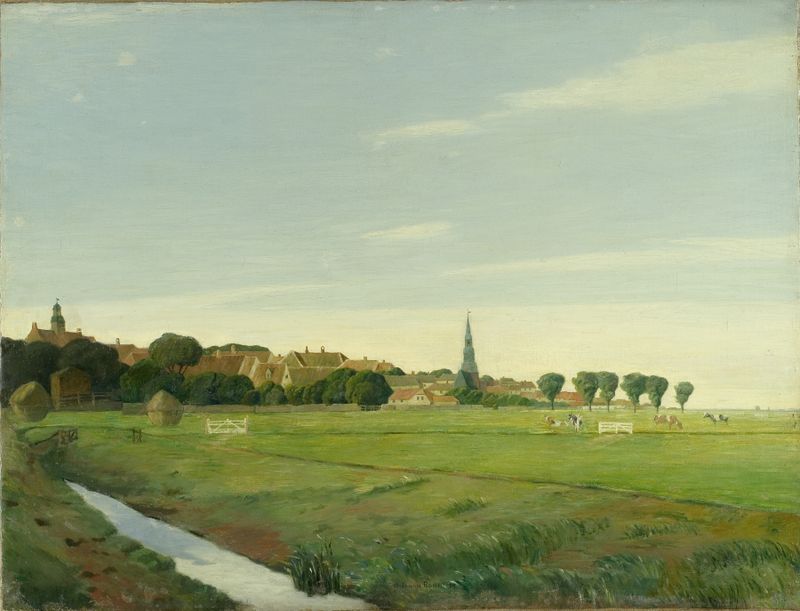
Could a single brushstroke hold eternity? In Summer night at Tönning, the fleeting beauty of twilight is captured, inviting contemplation on the passage of time and the ephemeral nature of life. Look to the center of the canvas where a serene landscape unfolds, bathed in a deep blue hue that transitions to warm golds and soft purples. The horizon, marked by delicate streaks of cloud, draws the eye outward, creating a sense of depth and vastness. Notice how the light dances upon the surface of the water, subtly reflecting the twilight sky, while the gentle brushwork imparts a sense of movement, as if the scene breathes and shifts. Underneath this tranquil facade lies a profound contrast between the night’s stillness and the active life it conceals.
The silhouetted figures along the shoreline suggest stories untold, each shape a reminder of human presence against nature's grandeur. The vibrant interplay of color evokes nostalgia, encouraging viewers to reflect on their own memories of summer nights, evoking a quiet longing for connection amidst the fleeting beauty of life. In 1893, Johan Rohde painted this work during a period of artistic experimentation in Denmark, where he was deeply influenced by the Impressionist movement. The vibrant palette and evocative subject matter reflect the shift towards capturing everyday moments with emotional resonance, a departure from the strictures of academic painting.
At this time, Rohde was also grappling with his own artistic identity, seeking to blend the decorative aspects of art with the emotional depth inspired by the natural world.