View of ‘Kastellet’, Copenhagen — History & Facts
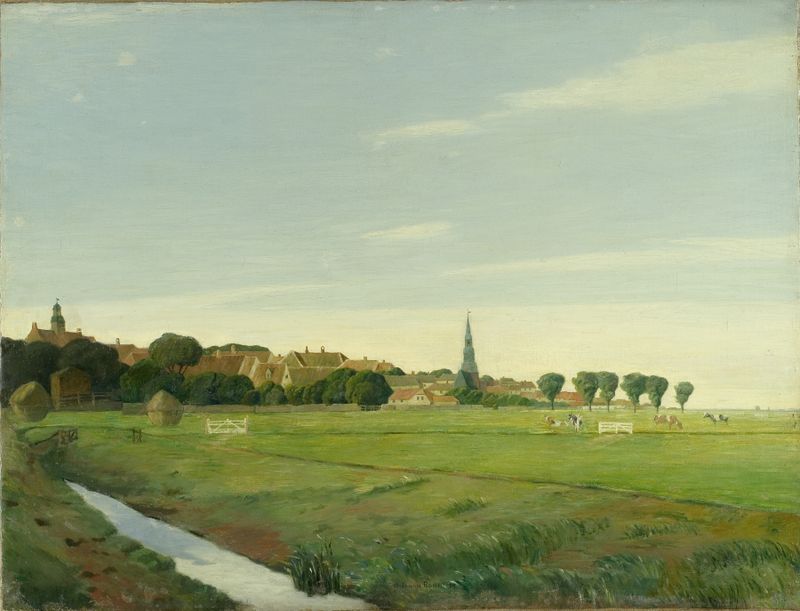
When did color learn to lie? Is it the brushstroke's choice or the artist's intent that weaves truth into deception, capturing divinity in a single moment? Look to the left at the bright greens of the grass, lush and inviting, drawing the eye to the serene structure nestled within the trees. The vibrant palette juxtaposes reality with a sense of idyllic charm, inviting viewers into a world that feels almost otherworldly. Notice how the light falls upon the red-tiled roof, casting playful shadows that dance along the cobblestone paths, while the crisp blue sky looms above as a soft reminder of nature's grandeur.
Each stroke seems deliberate, weaving a symphony of color that juxtaposes the tranquility of the setting with a subtle undercurrent of restlessness. As you delve deeper, consider the contrasts at play: the stillness of the architecture against the restless wind shaping the trees, the harmonious blend of human craftsmanship intersecting with untamed nature. This tension invites contemplation of the divine presence felt within the ordinary, suggesting that beauty often lies in the intersection of chaos and serenity. The viewer is compelled to explore the relationship between structure and the natural world, a dialogue that resonates throughout the canvas. Johan Rohde painted this piece in 1890 during a significant period for Danish art.
As a member of the rising modernist movement, he sought to capture the essence of everyday life, moving away from the constraints of traditional realism. This work reflects both his personal evolution and the broader transition within the art world, mirroring the tensions of a society on the cusp of change, where the beauty of nature and human experience intersect intriguingly.