Sunset — History & Facts
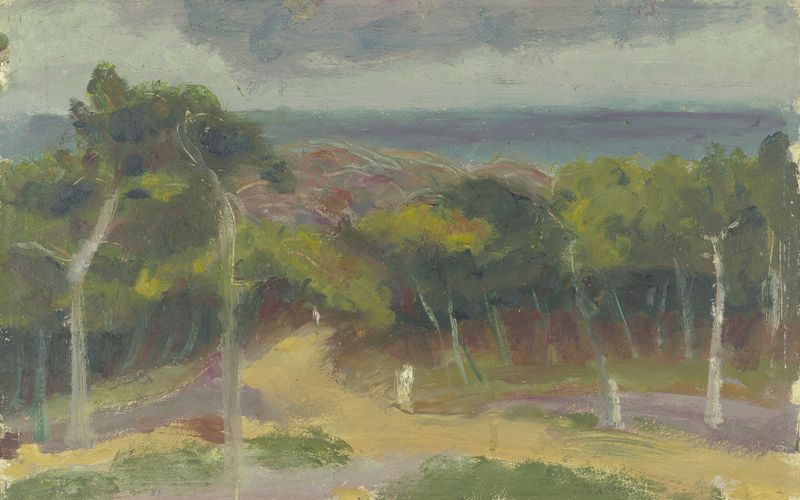
Could beauty survive in a century of chaos? In Sunset, Arno König captures the fragile essence of grief, underlined by the fiery blaze of a setting sun. Look to the warm hues filling the canvas, where orange and crimson meld into deeper purples and blues. The light emanates from the horizon, casting a glow that illuminates the edges of dark silhouettes in the foreground. The composition draws the eye across the canvas, mimicking the transition from day to night, where one might sense both closure and yearning.
Each stroke reveals König's deft mastery of color blending, inviting us into a moment suspended between hope and loss. Upon closer inspection, subtle details emerge—dark clouds gathering at the edges hint at an approaching storm, embodying the weight of unexpressed sorrow. The sun, though radiant, sinks deeper into the earth, a poignant reminder of time's relentless passage. The juxtaposition of vibrant life against encroaching darkness evokes an emotional tension, suggesting that amid our brightest moments may lie the shadows of grief. König painted Sunset at an uncertain time in his artistic journey, likely reflecting the turbulence of the early 20th century.
Emerging amid the upheaval of two World Wars and rapid societal changes, his work often sought to encapsulate the beauty and pain of existence. This piece serves as a testament to resilience, challenging viewers to find solace in the fleeting beauty of life's transitions.