Seascape — History & Facts
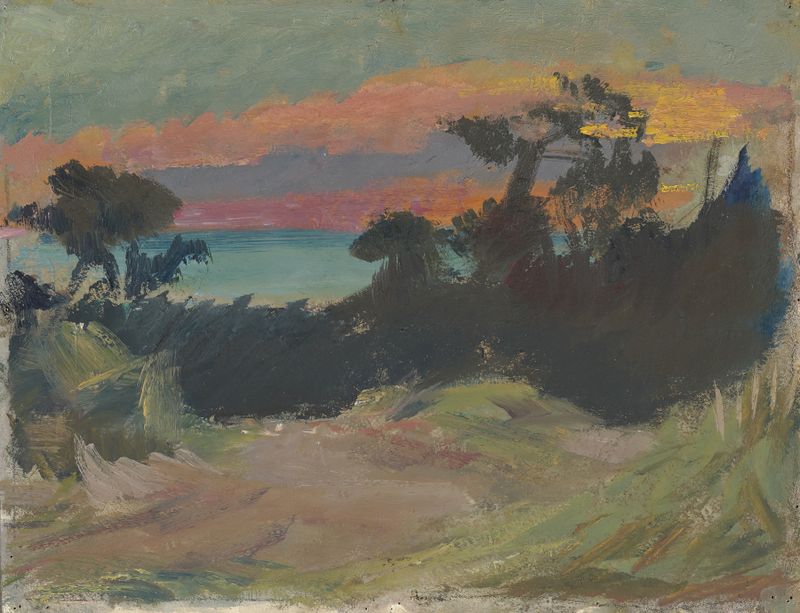
What if silence could speak through light? In Seascape, the stillness of the ocean evokes a memory, resonating with a weight of unsaid thoughts and feelings. Focus on the expansive horizon where the sea meets the sky, a gentle gradient of blues that morphs from deep navy to soft azure at the edges. In the foreground, the calm waves ripple, capturing the play of light as it glistens like scattered diamonds. Notice how the brushstrokes are fluid yet precise, creating a sense of movement that contrasts with the tranquility of the overall scene.
The sharpness of the clouds, juxtaposed against the soft sea, draws your eye upward, as if inviting contemplation of what lies beyond. The simplicity of the composition belies deeper emotional currents, suggesting themes of longing and nostalgia. The vast openness of the water hints at the unknown, evoking a sense of both peace and isolation. Each wave, a whisper from the past, speaks to the fleeting nature of memories, captured in the delicate interplay of light and shadow.
The painting becomes a vessel of time, where the viewer is encouraged to reflect on their own experiences and the moments that shape them. Arno König created Seascape in 1953 during a period marked by artistic exploration in post-war Europe. Living in Germany, König was influenced by the shifting tides of contemporary art, striving to balance abstraction with representational elements. This work emerged as he navigated his own journey of identity and expression, mirroring a collective search for meaning and tranquility in a world still marked by conflict and change.