Sunset Landscape — History & Facts
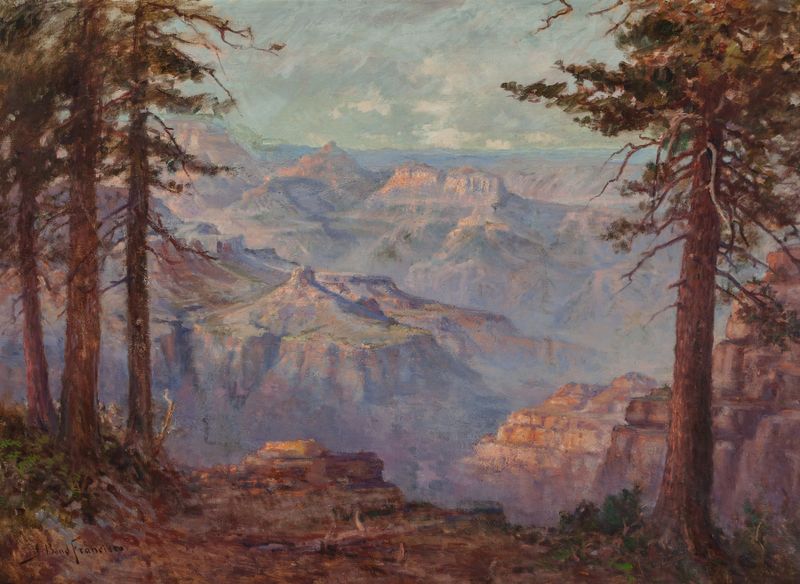
Could a single brushstroke hold eternity? In Sunset Landscape, the void between day and night pulsates with life, inviting contemplation of what lies beyond the horizon. Focus on the vibrant sky, where warm oranges and deep purples collide, creating a mesmerizing tapestry that draws the eye. Notice how the soft, sweeping strokes depict the transient beauty of the setting sun, while the gentle undulations of the landscape below anchor the composition. Francisco’s use of light and shadow creates a harmonious balance, emphasizing the ethereal quality of the evening sky, suggesting both serenity and an inevitable passage. Delve deeper into the painting, and you might sense the tension between the void of night and the lingering warmth of day.
The horizon line, almost insubstantial, evokes a feeling of longing—perhaps for what has been lost or what is yet to come. The interplay between the light-filled sky and the encroaching darkness reflects the duality of existence, stirring emotions and inviting reflections on life’s fleeting moments. In 1891, Francisco painted this piece during a time when American artists were increasingly influenced by Impressionism and exploring new ways to capture the natural world. Living in California, he found inspiration in the sweeping vistas and dramatic sunsets of the region, mirroring broader shifts in society as industrialization began to alter landscapes and lifestyles.
This work stands as both a personal meditation and a contemplation of change, revealing a moment that bridges the light of day with the mysteries of night.