Sunset, San Giorgio, Venice — History & Facts
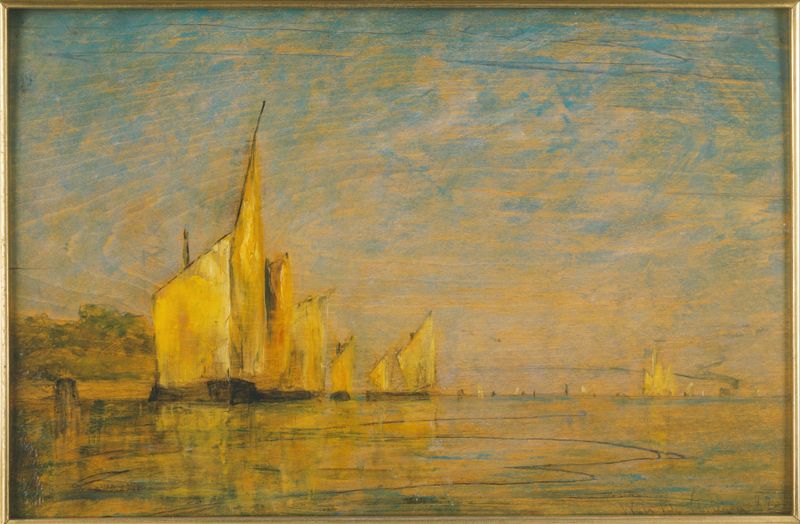
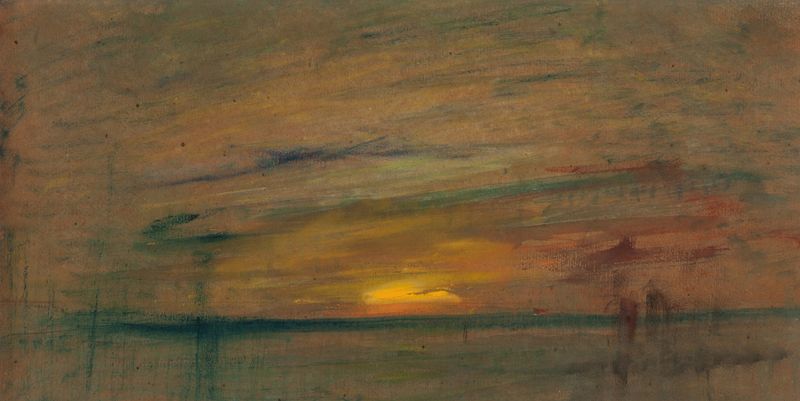
Did the painter know this moment would outlive them? In the glowing embrace of dusk, a world poised on the cusp of transformation emerges—a fleeting instance where light dances on water, promising change and evoking nostalgia. Look to the horizon, where the sun descends, casting a warm palette of oranges and pinks that blend seamlessly into the delicate blues of the evening sky. Notice how the reflections shimmer upon the calm waters of the lagoon, framing the iconic silhouette of San Giorgio Maggiore. The artist employs fluid brushstrokes to convey the gentle ripples, creating a sense of movement, as though the moment is alive, begging the viewer to linger just a bit longer. Bunce captures a profound duality—the tranquility of the scene juxtaposed with the inevitability of change.
The tranquil waters mirror not just the sky but also the weight of time passing, suggesting a deeper contemplation of life’s transitory nature. The distant church, cloaked in amber light, serves as a monument to permanence amid the ephemeral; its steadfastness in the embrace of twilight resonates with the viewer, echoing the tensions of human experience. William Gedney Bunce painted this work during a period of rich artistic exploration in the late 19th century, settling in Venice, a city renowned for its romantic allure. His life at that time was marked by an immersion in Impressionist techniques, reflecting a growing interest in capturing fleeting moments of beauty.
The historical significance of Venice as a subject contributed to the painting’s enduring impact, intertwining personal and cultural transformations in the face of time’s relentless march.