
Swan Stairs, London Bridge — History & Facts
When did color learn to lie? In the realm of art, this question dances between authenticity and illusion, inviting us to explore the complexities of perception. Focus first on the vibrant hues cascading down the steps, where the interplay of light and shadow creates a striking contrast. Notice how the vibrant blues and greens blend harmoniously with the grays of stone, revealing a scene that feels both alive and elusive. The careful brushwork invites your eyes to wander, drawing you deeper into the enchanting yet deceptive atmosphere of the stairway. As you absorb the details, consider the figures scattered throughout the composition, each one imbued with a sense of purpose yet seemingly detached from their surroundings.
This juxtaposition between the lively stairs and the solitary individuals evokes a poignant tension, inviting reflection on the nature of connection and isolation. The illusion of movement and stillness alike captures the fleeting moments of life, a visual metaphor for the passage of time. In 1841, George Johann Scharf painted this piece while living in London, a city bustling with change and innovation. The early Victorian era was marked by rapid industrial growth and social upheaval, influencing the artistic landscape around him.
As a skilled draftsman and painter, Scharf captured the essence of contemporary life, navigating the delicate balance between romance and realism in his work.
More Artworks by George Johann Scharf
Browse all →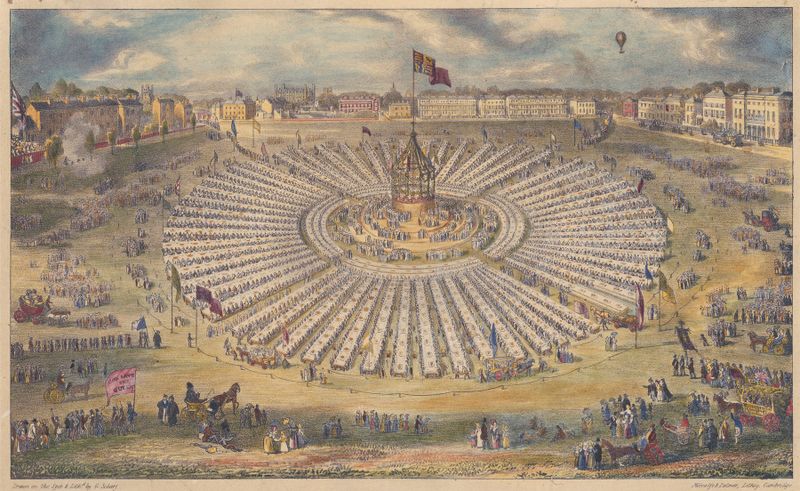
A View of the Grand Fete on Parker’s Piece, Cambridge
George Johann Scharf

Market Place, Wisbech Isle of Ely, Cambridgeshire…, June 28, 1838
George Johann Scharf

Shewing St. Michael’s Church, Cooked Lane, since taken down taken on the spot, June, 1830
George Johann Scharf

St. Paul’s, Deptford
George Johann Scharf
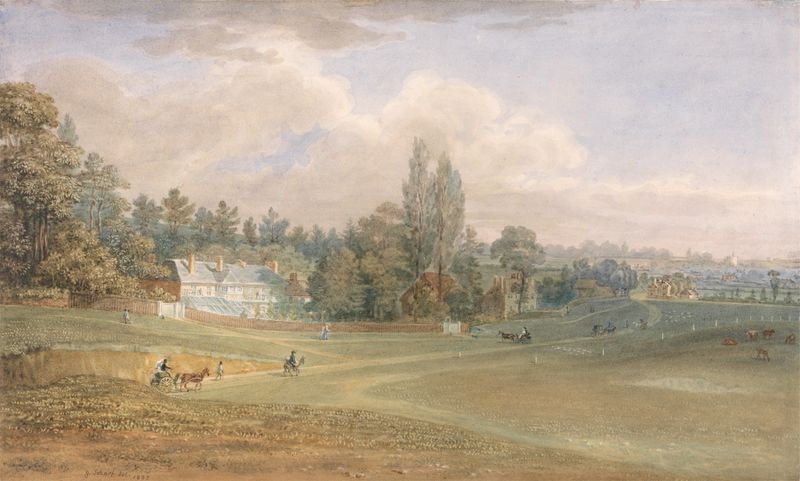
Reigate Heath
George Johann Scharf
More Architecture Art
Browse all →
The statue of Liberty
Frédéric Auguste Bartholdi

View of Houses in Delft, Known as ‘The Little Street’
Johannes Vermeer

View of Houses in Delft, Known as ‘The Little Street’
Johannes Vermeer

The Cathedral in Rouen. The portal, Grey Weather
Claude Monet

The yellow house
Vincent van Gogh

The Church in Auvers-sur-Oise, View from the Chevet
Vincent van Gogh