
A View of the Grand Fete on Parker’s Piece, Cambridge — History & Facts
Can beauty exist without sorrow? In the delicate interplay of dreams and reality, George Johann Scharf's A View of the Grand Fete on Parker’s Piece, Cambridge invites us to reflect on the dualities of life that flourish in the heart of celebration. Look to the left, where wisps of joyous activity bloom amidst the crowd. The artist captures a kaleidoscope of people, each engaged in their own moment of delight, adorned in vibrant colors that dance against the verdant backdrop. Notice the precision in Scharf's brushwork, allowing the light to shimmer and shift, illuminating the faces of the revelers, whose expressions range from exuberance to contemplation.
The energetic composition pulls the eye across the canvas, creating a sense of movement that mirrors the pulse of the fête itself. Yet beneath the gaiety lies a profound tension. The juxtaposition of the festive atmosphere against the fleeting nature of these moments hints at a deeper narrative: the transient joy of gatherings that must eventually yield to the passage of time. The prominence of shadows adds depth; they remind us of the ephemeral quality of happiness, suggesting that each smile may hide its counterpart—the ache of longing for permanence.
This emotional dichotomy invites an introspective gaze, provoking questions about the essence of celebration and the bittersweet nature of memory. In 1838, Scharf painted this vivid scene during a time of cultural flourishing in the UK, weaving social commentary into his work. The Grand Fete, a significant event in Cambridge, reflected the burgeoning middle class and their desire for leisure and community. As Scharf captured this pivotal moment, he was also establishing himself as an observer of society, navigating a world rich in beauty but ever aware of its transient nature.
More Artworks by George Johann Scharf
Browse all →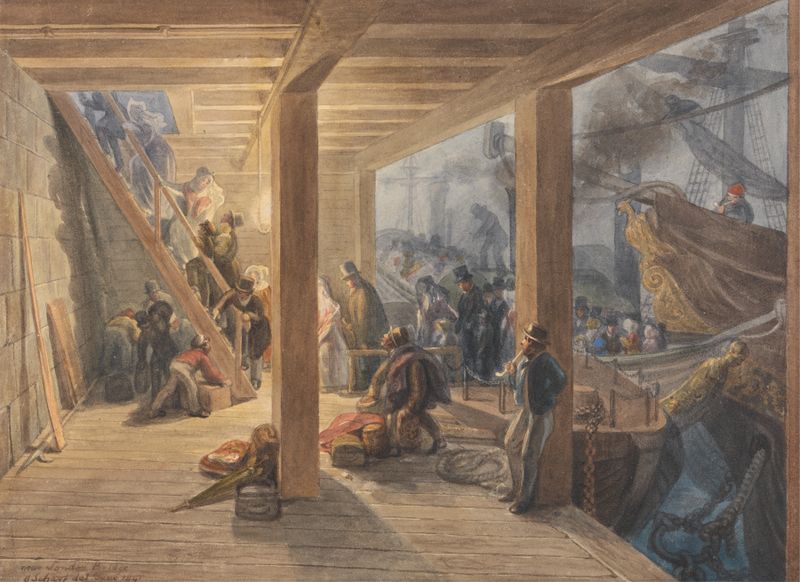
Swan Stairs, London Bridge
George Johann Scharf

Market Place, Wisbech Isle of Ely, Cambridgeshire…, June 28, 1838
George Johann Scharf

Shewing St. Michael’s Church, Cooked Lane, since taken down taken on the spot, June, 1830
George Johann Scharf

St. Paul’s, Deptford
George Johann Scharf
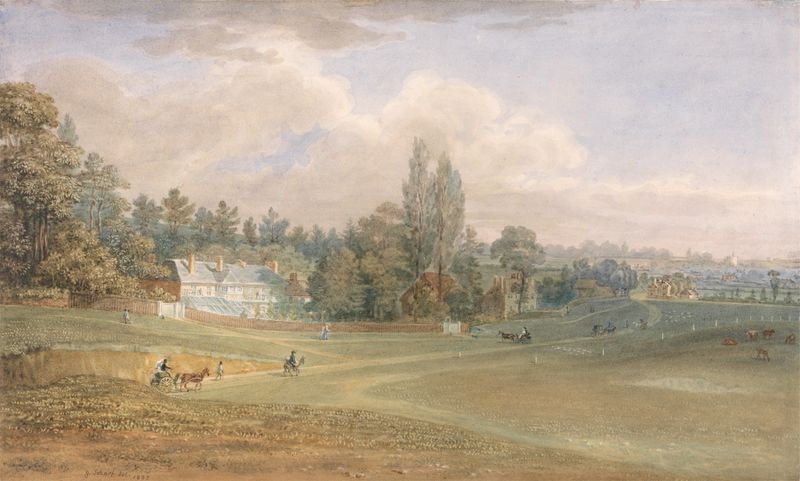
Reigate Heath
George Johann Scharf





