
Tarohonga Creek, Rimutaka Road — History & Facts
Could beauty survive in a century of chaos? Tarohonga Creek, Rimutaka Road invites us to reflect on this profound question, capturing the essence of creation within the stillness of nature's embrace. Look to the left at the gentle flow of the creek, where the water glistens like liquid silver under the painter's careful brush. The winding path leads the eye through lush foliage, interspersed with vibrant greens and earthy browns, evoking a sense of harmony. Notice how Chevalier's use of light breathes life into the scene, casting delicate shadows that dance upon the ground and play along the edges of the trees, amplifying the serenity of this untouched landscape. Hidden within this picturesque vista are layers of emotional tension; the stillness of the water contrasts with the tumult of the world beyond the canvas.
Each element—the towering trees, the rugged cliffs—whispers of resilience, conveying both fragility and strength. The interplay of light and shadow speaks to the transient nature of beauty, suggesting that even in a chaotic era, moments of peace can flourish and endure. Nicholas Chevalier painted this work in 1868 while living in New Zealand, a time when the country was undergoing significant changes due to colonization and social upheaval. Chevalier, a prominent figure in the art scene, was exploring the landscapes of his adopted home, capturing the sublime beauty of the New Zealand wilderness amidst the transformations around him.
This painting reflects both the artist's personal journey and the broader historical context, merging the tranquility of nature with the complexities of a rapidly changing world.
More Artworks by Nicholas Chevalier
Browse all →
Coast near Dunedin
Nicholas Chevalier
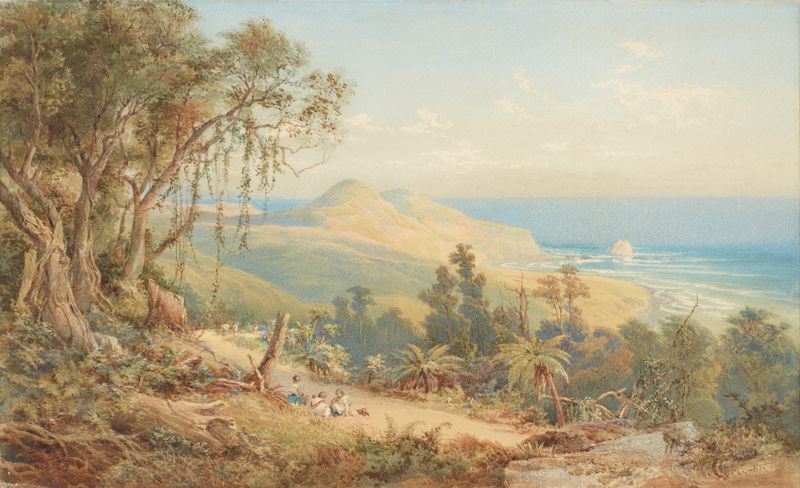
Sandfly Bay, Otago
Nicholas Chevalier

Buckler Burn at the head of Wakatipu Lake
Nicholas Chevalier

Mr MacKellar’s Station, the Waimea Plains, Southland
Nicholas Chevalier
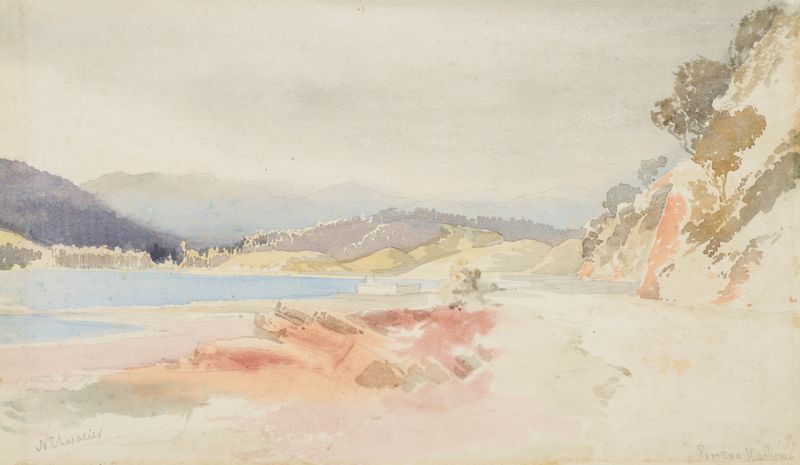
Porirua Harbour
Nicholas Chevalier
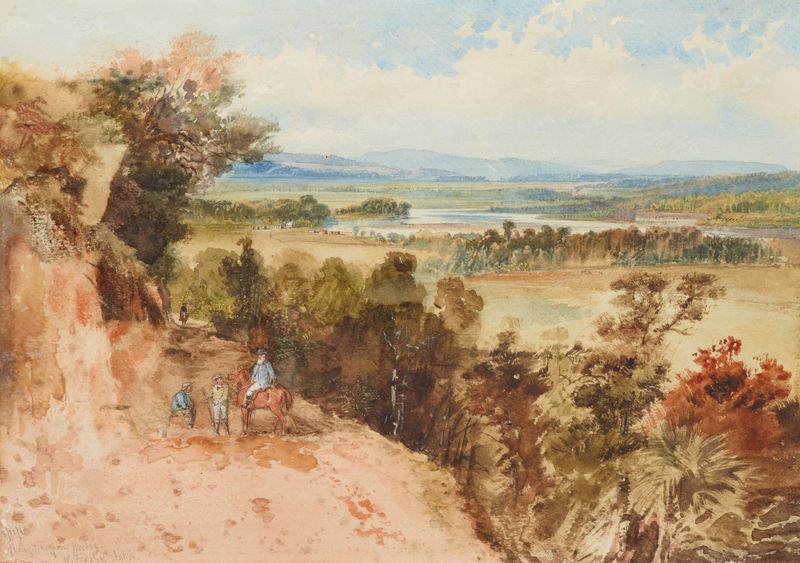
Rangitikei from Westoe, W. Fox Esq’s Station
Nicholas Chevalier

The Upper Rangitikei
Nicholas Chevalier
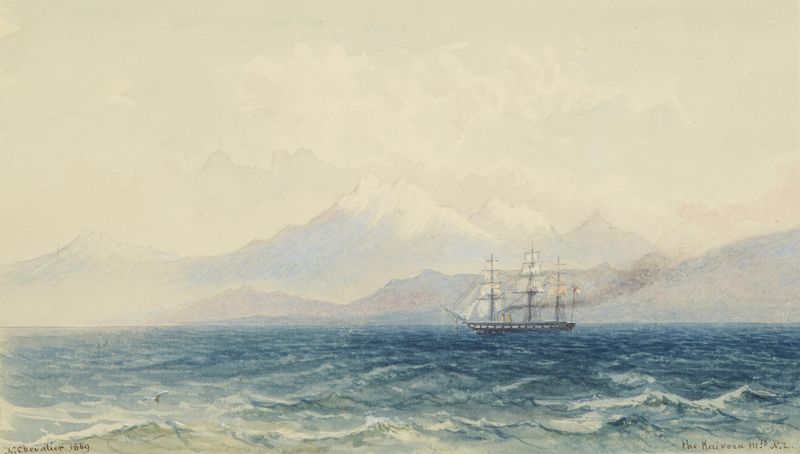
The Kaikoura Mountains, N.Z.
Nicholas Chevalier

Upper Hutt Valley
Nicholas Chevalier

The Tararua Mountains and the Waipoua River
Nicholas Chevalier





